
I Can't Afford It
The KMAA Chronicles
"I Can't Afford It":
The Honest Math on What Training Actually Costs
You've been circling this for a while now.
You've decided you're not too old, too out of shape, or too late. You've worked out where the hours could come from. And then you opened the pricing page, or just imagined opening it, and something in your chest tightened, and a familiar sentence showed up:
"I can't afford it."
Let me put the number on the table before you have to go looking for it: our membership is $250 a month.
It sounds like that landed with a thud. That's a fair reaction. It's more than a lot of gyms charge, and I'm not going to pretend otherwise.
So here's the deal I'm making with you. We're going to do the math out loud, all of it, including the math that argues against spending money with us. I'll show you exactly what the extra money buys, and then you get to decide whether it's worth it. If the numbers say it isn't, I want you to believe the numbers. And if they say it is, you'll know exactly why, in your own handwriting and not mine.

First, Let's Take the Objection Seriously
Money is not a flimsy excuse. For a lot of people, it's the most real constraint in their lives. Rent went up. Groceries went up. Some of you are carrying a budget so tight that one more line item isn't a decisio; it's a risk. If that's you, nothing in this post is an indictment of your character, and I'm not going to tell you to "just make it a priority" as though priorities were the whole story.
But after 27 years of watching people stand at this exact doorway, I've learned that "I can't afford it" is really two different sentences wearing the same words:
"There is no margin in my budget."A true statement about arithmetic.
"The number feels bigger than what I'd get back."A statement about value, not arithmetic, and it's the one that most often hides inside the first.
Only you can know which sentence you're actually saying. But the second one is something we can do real work on, because it's a math problem. And most people have never run the math. They've reacted to a monthly price in isolation, which is the least informative way to look at it.
So let's run it.
Step One: Stop Looking at the Monthly Price
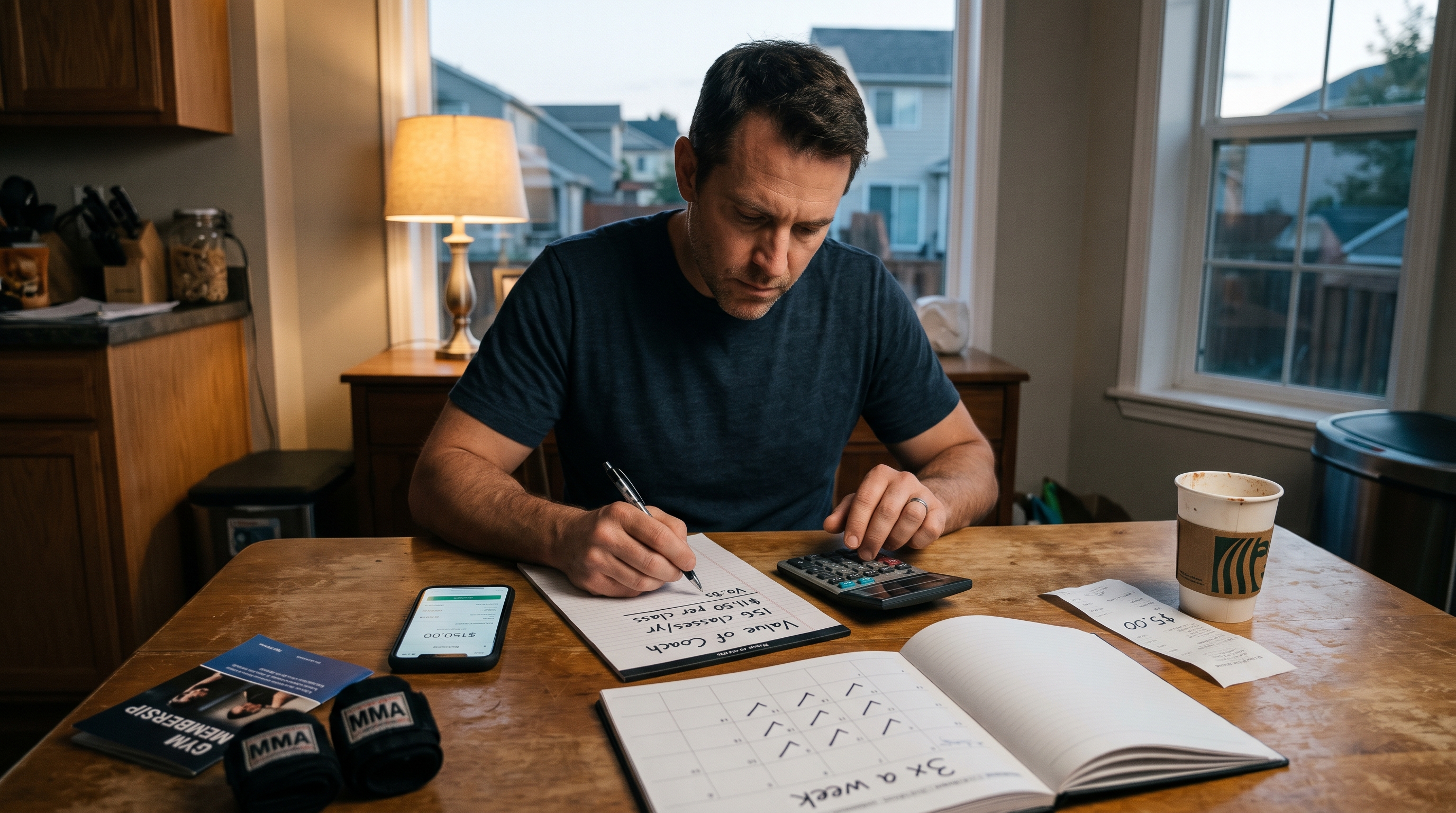
A monthly price is a sticker. It tells you what leaves your account, not what you get for it. The number that actually matters is cost per session: what each class costs once you count how often you'll go.
The formula is simple: monthly price ÷ sessions per month.
Here it is with our real number. Say you train three times a week:
Three classes a week is about13 sessions a month, or 156 sessions a year.
$250 a month is$3,000 a year.
$3,000 ÷ 156 sessions = about$19 per session.
(Considering a different gym? Plug in their price. The formula works anywhere.)
And what is each of those sessions? Not a treadmill and a locker. It's a coached hour: high-level instructors watching you, correcting you, and building your progression, in a room full of training partners. A group class isn't a private lesson, so don't expect identical attention. But for context, an hour with a personal trainer commonly starts around fifty dollars and climbs from there, for one person's attention. At about $19 a session, you're paying well under half of that for coaching from people who have operated at the top of the sport.
Here's another way to see it: $250 a month is a little over eight dollars a day. Less than a typical lunch out, every day, for a year of coached training.
Step Two: Audit the Invisible Budget
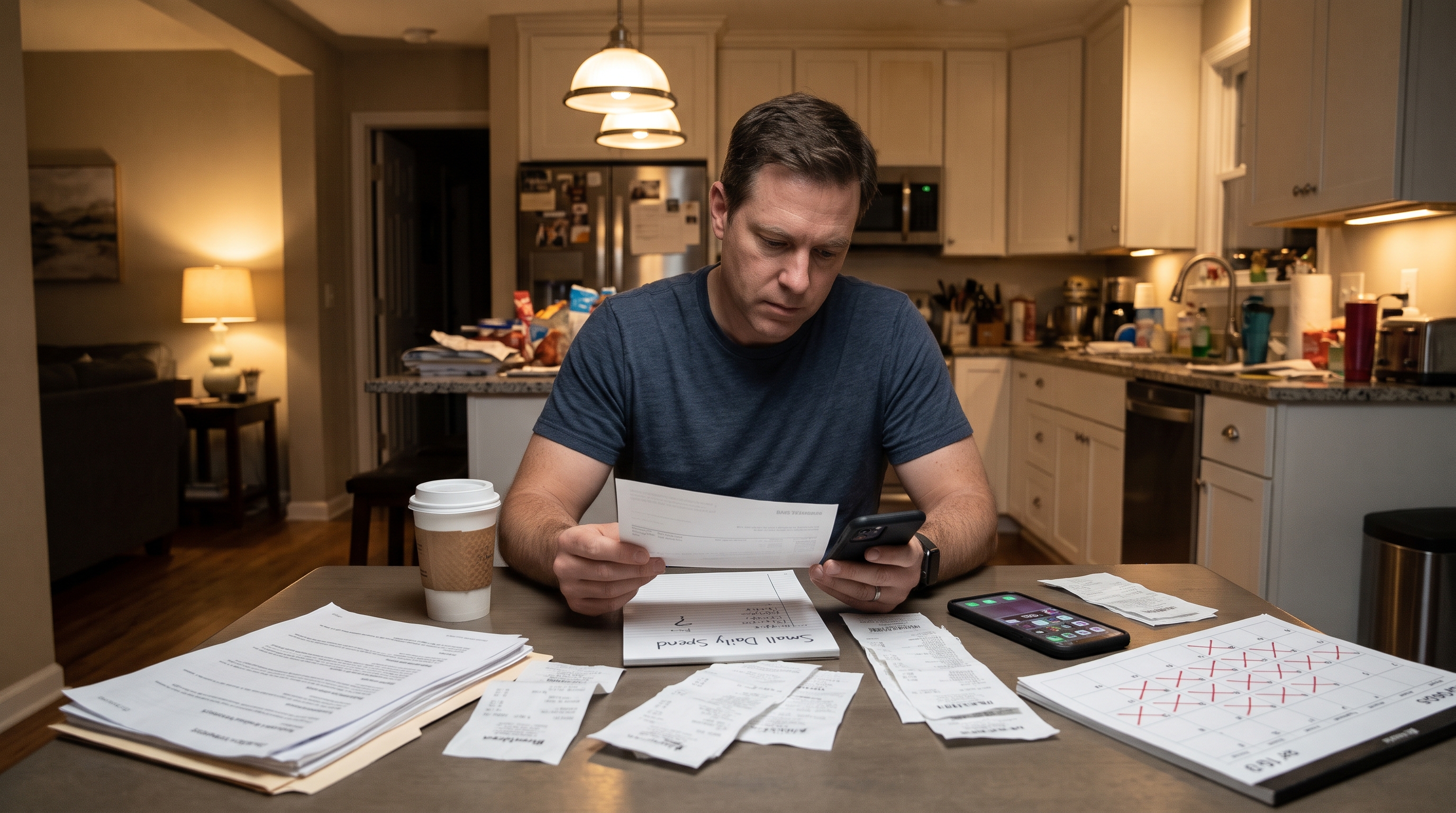
Here's a harder question, and I'm asking it without judgment: where is your money already going that you don't feel it's going?
Small, recurring spending is built to be invisible. Here are a few illustrative examples. These are made-up round numbers, not a verdict on your life, so pull up your own statement and look:
A $6 drink on the way to work, five days a week:$1,560 a year.
Two delivery meals a week, counting fees and tip, around $30 each:$3,120 a year.
Four streaming services at $15 a month:$720 a year.
One forgotten subscription at $12 a month:$144 a year.
Nobody's budget looks exactly like this, and I'm not telling you to give up comfort. Comfort is part of a good life. But watch how quickly the category adds up. Here's one illustrative way to fund an entire year at $250 a month without finding a single new dollar:
Delivery from two meals a week down to one:$1,560
The café drink from five days a week down to two:$936
Two of the four streaming services cancelled:$360
The forgotten subscription gone:$144
Total:$3,000, a full year of membership
The point is the category, not the guilt: a lot of us "can't afford" the thing we want while quietly affording things we'd never consciously choose over it. So don't ask "can I afford one more bill?" Ask a better question: "If I ranked everything I spend money on by what it gives back, where would a coached, three-times-a-week practice land, and what's currently sitting above it?"
Swap, don't stack. Most people who train for years didn't find extra money. They reallocated money they were already spending.
Step Three: What a Membership Has to Deliver to Be Worth It
Now the part where I argue against my own interest. A membership isn't worth $250 because it costs $250. It's worth it only if it delivers, and here's the five-part test I'd run on any gym, ours included:
Coaching you can feel. Someone actually watches you, learns your name, and corrects you in class. If no coach can tell you what you're working on this month, you're paying for access, not instruction.
A path.A curriculum with a visible progression, so you know where you are in month three and what comes next in month six. Drifting from class to class is attendance, not training.
Safety you can verify.A real system for managing sparring, intensity, and partner matching. An injury is the most expensive line item of all, and we've written about how to check for this in any gym.
People who notice when you're gone. Belonging is the best retention tool ever invented. The gym where someone texts you after you miss a Tuesday is the gym you're still attending in month six, and the week-six dip is where most memberships quietly die.
Progress you can see.Not necessarily on the scale. In skill, in composure, in energy, in confidence. Something concrete you could point to at the 90-day mark.
Score any gym on those five. If it can't deliver at least four, don't join, no matter how low the price is. And if it delivers all five, the price is the least important number on the page.

Why Ours Costs More
Now to the number itself. $250 is not the lowest price in Knoxville, and it isn't supposed to be. We charge more because we offer more, and I'd rather show you where the money goes than ask you to take it on faith:
Elite, high-level coaching.UFC-level coaches, the kind who have developed and cornered professional fighters, teaching a room that includes first-day beginners. Elite coaching is the most expensive thing a gym can buy, and it's the thing that most directly determines whether you improve. Private time with a coach at that level commonly costs many times what a class here costs per session.
CombatCare.Our safety and safeguarding system, modeled on SafeSport, the standards used in Olympic sport. It covers power dynamics, adult-youth protocols, bystander intervention, ongoing consent, and adult welfare. It's invisible when it's working, and it's the reason nobody has to wonder what happens if something goes wrong. Very few gyms have anything like it.
The Elysium Organization. The 501(c)(3) we built to fund scholarships and competition costs for underserved athletes. A gym that believes talent and effort shouldn't depend on a bank balance has to put real infrastructure behind that belief, and this is ours.
A path, not a pile of classes. A written curriculum built on named movement principles, so what you learn in month three builds on month one instead of starting over every week.
Room to do it right.25,000 square feet, the largest MMA facility in Tennessee, with the mats, cages, and bag racks to let classes run without being on top of each other. A building that size costs what it costs to heat, insure, and staff.
That's the short list. None of it is free, and all of it is why the number is what it is.
And none of it makes $250 right for everyone. If you want a casual place to hit a bag a couple of times a month and you don't care about coaching depth, a cheaper gym may serve you better, and I'd tell you so to your face. This price is for people who want to actually get good, safely, in a room that takes them seriously.
The Gym Where Cheap Is Expensive
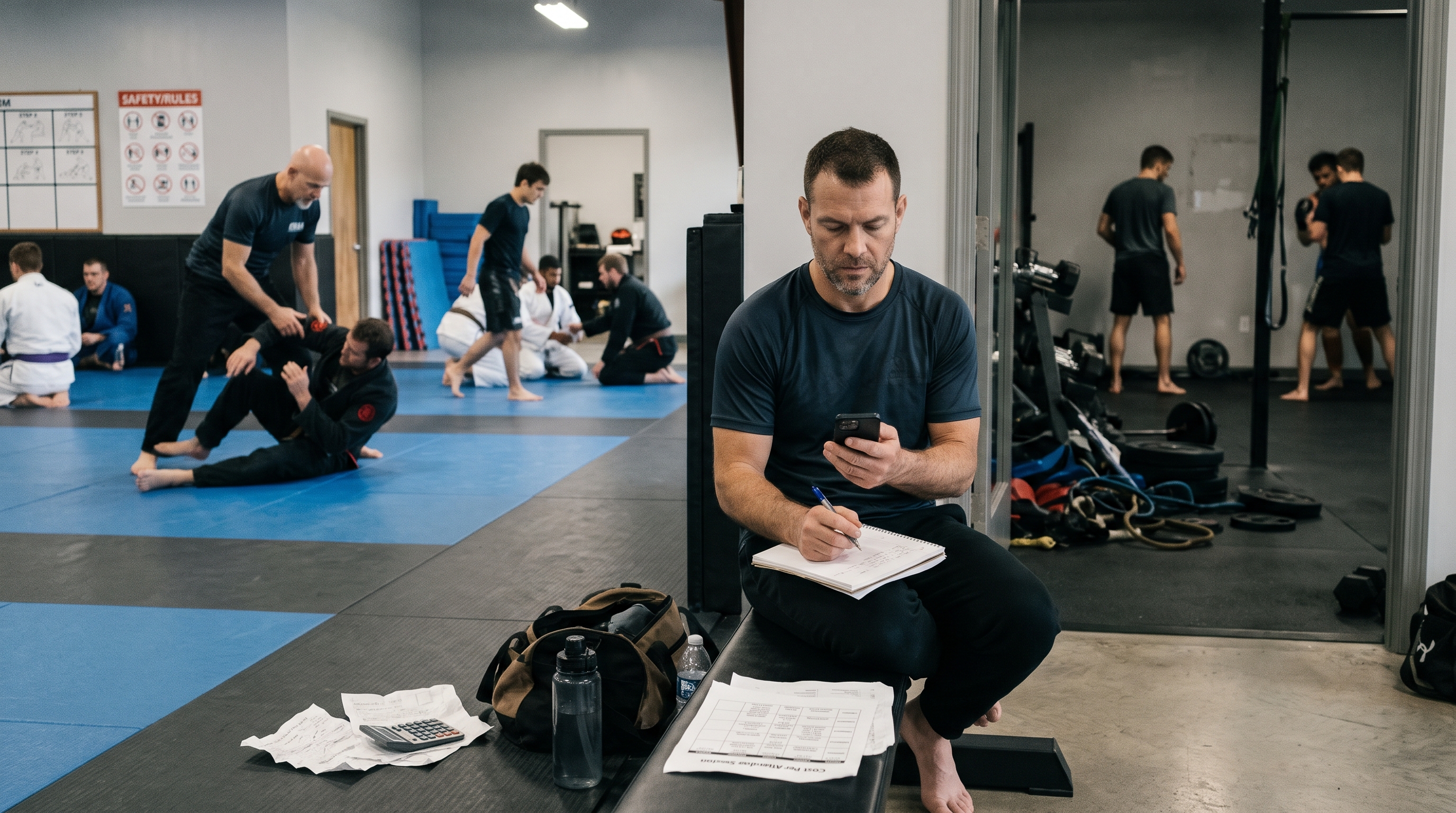
This is the part nobody puts in the ad. A low price can turn out to be the most expensive option, and the reason is a number almost nobody calculates:cost per attended session.
A $50-a-month membership you use twice a month costs$25 a session.
Our $250-a-month membership, used 13 times a month, comes to about$19 a session.
The cheaper sticker is the more expensive session. And that's before counting what a bargain gym usually can't pay for. If a cheaper gym truly delivers all five items on the test and you'd really go 13 times a month, it wins on price, and you should go there. But the risk was never the low price. The risk is what a low price often can't afford: coaching with real attention, a system for managing injuries, a community that notices when you're gone. Without those, a floor with no coaching doesn't produce progress, no progress produces boredom, and boredom produces the quiet exit around week six. Then you're out the money, and the 90 days, and worse, you've concluded that training isn't for you. Wrong gym, wrong conclusion, real cost.
Then come the hidden line items. The contract that's easy to start and hard to leave. The add-on fees. And the one that dwarfs every other number on this page: a preventable injury from a poorly managed room. Missed work, medical bills, months off the mat. One bad injury can cost more than several years of the best membership in town.
Cost per month is a price. Cost per attended session, with coaching that works, is a cost. Only one of those tells you the truth.

The Other Side of the Ledger
Every ledger has two columns, and so far we've only filled in one.
What doesn't training cost? I can't price it for you, but I can name the line items. Health economists have found, repeatedly, that physically inactive adults carry higher medical costs year over year than active ones. Stress with nowhere to go gets spent somewhere: sleep aids, comfort purchases, the things we buy to feel better for an evening. Low energy costs you at work and at home. And then there's the cost that won't fit on any statement: another year of being the person who almost did it.
Run both futures out twelve months. In one, you spent $3,000 and walked into 156 coached sessions: stronger, calmer, more capable, surrounded by people who know your name. In the other, you kept the $3,000, and twelve months from now you're standing in the same place with the same sentence in your head, one year older.
The first isn't spending money. It's converting money into a person you'd rather be.
If the Budget Really Is Zero
I told you I'd be straight about this, so here it is: if there is truly no room, don't go into debt to join a gym, ours or anyone's. That's a bad trade, and any gym that pushes you toward it isn't one to trust.
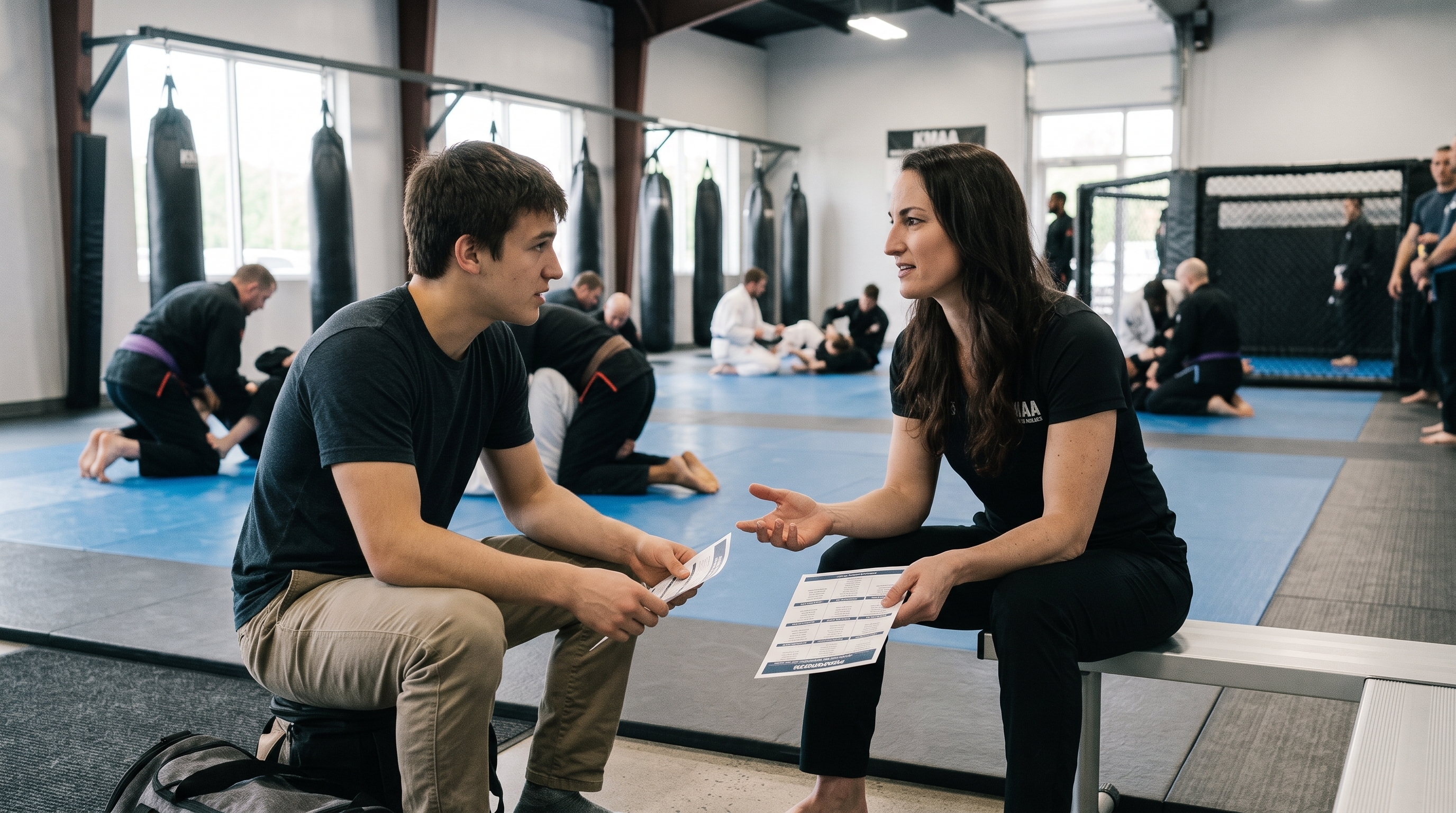
But "no room for the full price" and "no path at all" are not the same thing. A few places to start:
Start with the intro offer: two classes for $20. It's not a free trial. It's a small, real first step that tells us you're serious and tells you whether this room is right, for less than most people spend on lunch. You'll learn more about value in two classes on the mat than in 60 pages of pricing.
Ask about The Elysium Organization. It exists to fund scholarships for underserved athletes. If money is the only thing standing between you and training, tell us.
Tell us where you are. We'd rather have a plain conversation about what works than lose you to a number you never got to talk through.

Where the Math Lands
Here's the whole post in four sentences. A monthly price is a sticker; cost per attended session is the real number. Most of us already afford things we'd never choose over this, so the question is reallocation, not extra money. A membership is only worth $250 if it delivers elite coaching, a path, verified safety, belonging, and visible progress, and the bargain gym that doesn't deliver them is the most expensive one in town. And if the math says no, believe the math; if it says yes, you'll know exactly why.
You can do all of this in ten minutes with a pen and your last bank statement. Or you can do it with someone who'll sit down with you, show you what a month actually looks like, and answer every question on that five-part test before you commit to anything.
Would it be ridiculous to let us show you the math in person? Take the two-class intro for $20, bring this post, and run us through the five criteria. If we can't hold up to them, you should walk. If we do, you'll walk away with something rare: a decision you made with your eyes open.
Two classes for $20 are waiting. Bring your questions, and bring your calculator.
Knoxville Martial Arts Academy has spent 27 years helping people turn a monthly price into a capable, confident life, in the largest and most successful MMA facility in Tennessee. We'll show you the math, and we'll answer every question on the list.
