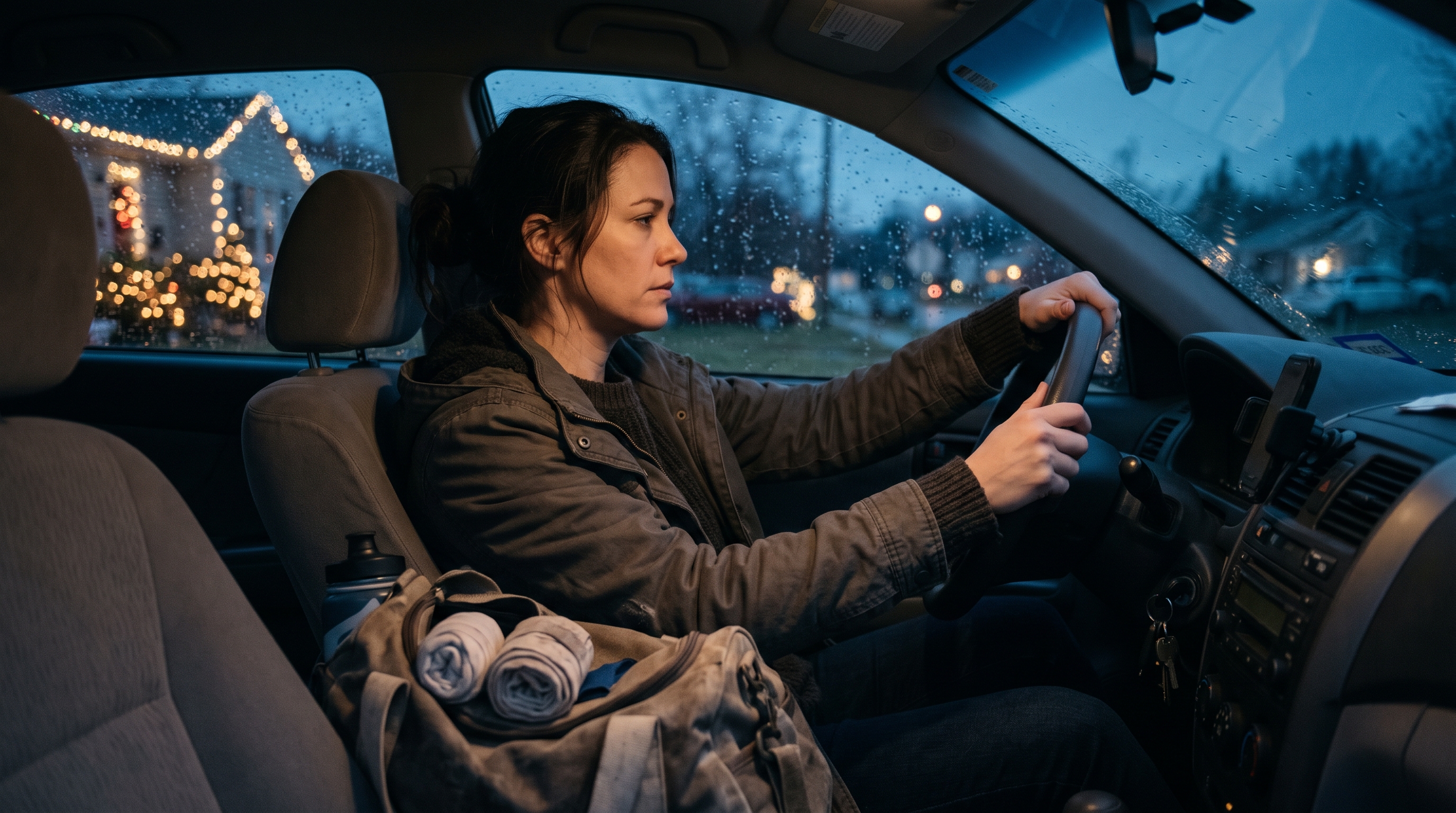
Gratitude Is a Skill
The KMAA Chronicles
Gratitude Is a Skill, Not a Feeling
(And You're Allowed to Find This Holiday Hard)
It sounds like you've heard the word thankful about forty times since Monday.
On the banners. In the group chat. From the cashier who says it like a password. If this is an easy week for you, wonderful. But if the word lands with a thud for you (an empty chair at the table, a full chair with someone in it who makes your jaw tighten, a bank balance that turns "thankful" into a punchline), then I want to say this before anything else: you are not broken, and you are not ungrateful. You're a person having a week.
You may also be bracing for the mentor to tell you to count your blessings. I'm not going to do that. I'm telling you as a long-time coach, which means I spend my days with people at their best and at their worst, sometimes in the same hour. The last three decades taught me the same thing about gratitude, and it isn't what the greeting cards say: gratitude is not a feeling you wait for. It's a skill you train.
You're allowed to find this holiday hard. You're also allowed to get better at gratitude. Both are true.
You Can't Order a Feeling. You Can Train an Attention.
Try something. Feel calm, right now, on command.
How did that go?
Feelings don't take orders, which is why "just be grateful" is such useless advice. It hands you a destination and no road. A feeling is an outcome. What you can influence, imperfectly and with practice, is where your attention goes and what you do with it. That's a skill, and skills are the one thing I know how to teach.
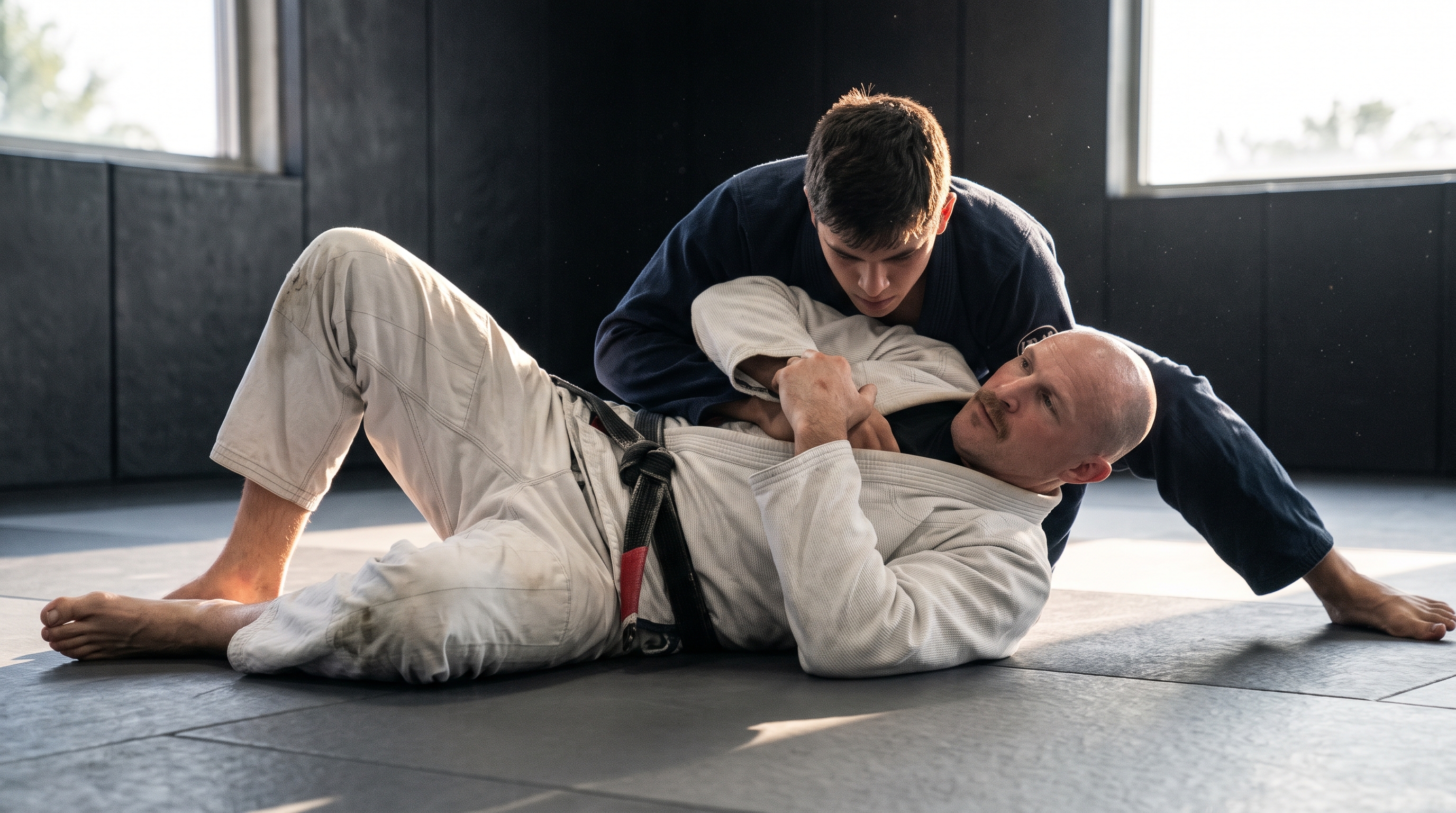
Nobody steps onto the mat and feels like a black belt. They train. Poorly at first, then less poorly, until the thing that once took ten seconds of conscious effort happens without thinking. Most of us are extremely well trained at noticing what's wrong: the email, the dent in the bumper, the thing a relative said in 2019. Your brain is built to scan for threat. That isn't a character flaw. It's factory settings.
Watch a white belt in a bad position. They fixate on the one thing going wrong, the arm being pulled, and miss everything still available: the posture, the breath, the exit. A black belt sees the whole position. That is what trained gratitude is. It's learning to see the whole position, including what's still working while something else isn't.
Seeing the whole position doesn't mean pretending the bad part isn't there. It means refusing to let the bad part be the only thing on the screen.

What the Research Actually Says (And What It Doesn't)
A lot of gratitude content oversells, and you'd be right to be suspicious. So here's the honest version.
The study everyone cites is a 2003 paper by Robert Emmons and Michael McCullough. In one experiment, college students wrote weekly entries for about two months, listing either things they were grateful for, daily hassles, or neutral events. The gratitude group rated their lives more favorably, reported fewer physical complaints than the hassles group, and, my favorite detail, exercised about an hour and a half more per week. In a third study of adults living with neuromuscular disease, three weeks of gratitude journaling went along with better sleep, more optimism, and a stronger sense of connection to other people.
Notice what didn't change in that last group: their pain and physical functioning. Gratitude didn't fix the hard thing. It changed what else was true alongside it.
Two years later, Martin Seligman's team had more than 500 adults try one-week online exercises. Writing down three good things each day, along with why they happened, left people happier and less depressed, and the benefit was still showing six months later. A gratitude letter delivered in person produced a bigger jump, but it faded sooner.
Now the cold water. Later research has been less thrilling. A 2021 meta-analysis pooled 27 studies and roughly 3,700 people and found only a modest effect on symptoms of depression and anxiety. The authors said plainly that anyone struggling with those symptoms should reach for treatments with a stronger track record, like cognitive behavioral therapy. An earlier review, in 2016, landed in a similar place. Much of the early work used college students, ran a few weeks, and relied on self-report. Clinicians say the assignment can feel invalidating to someone in the thick of loss. And grateful people do tend to have better relationships and fewer mental health struggles, but that's correlation: an easier life may simply make gratitude easier.
So here is my summary, as a counselor: gratitude practice is not a treatment. It isn't therapy, and it doesn't replace therapy. What it appears to be is a small, cheap, low-risk habit that nudges mood, sleep, and connection in people who do it consistently. The effects are real however, which is how most good habits work. Nobody expects one class to change their body. We expect a year of them.
The Three-Minute Practice: Three Specifics
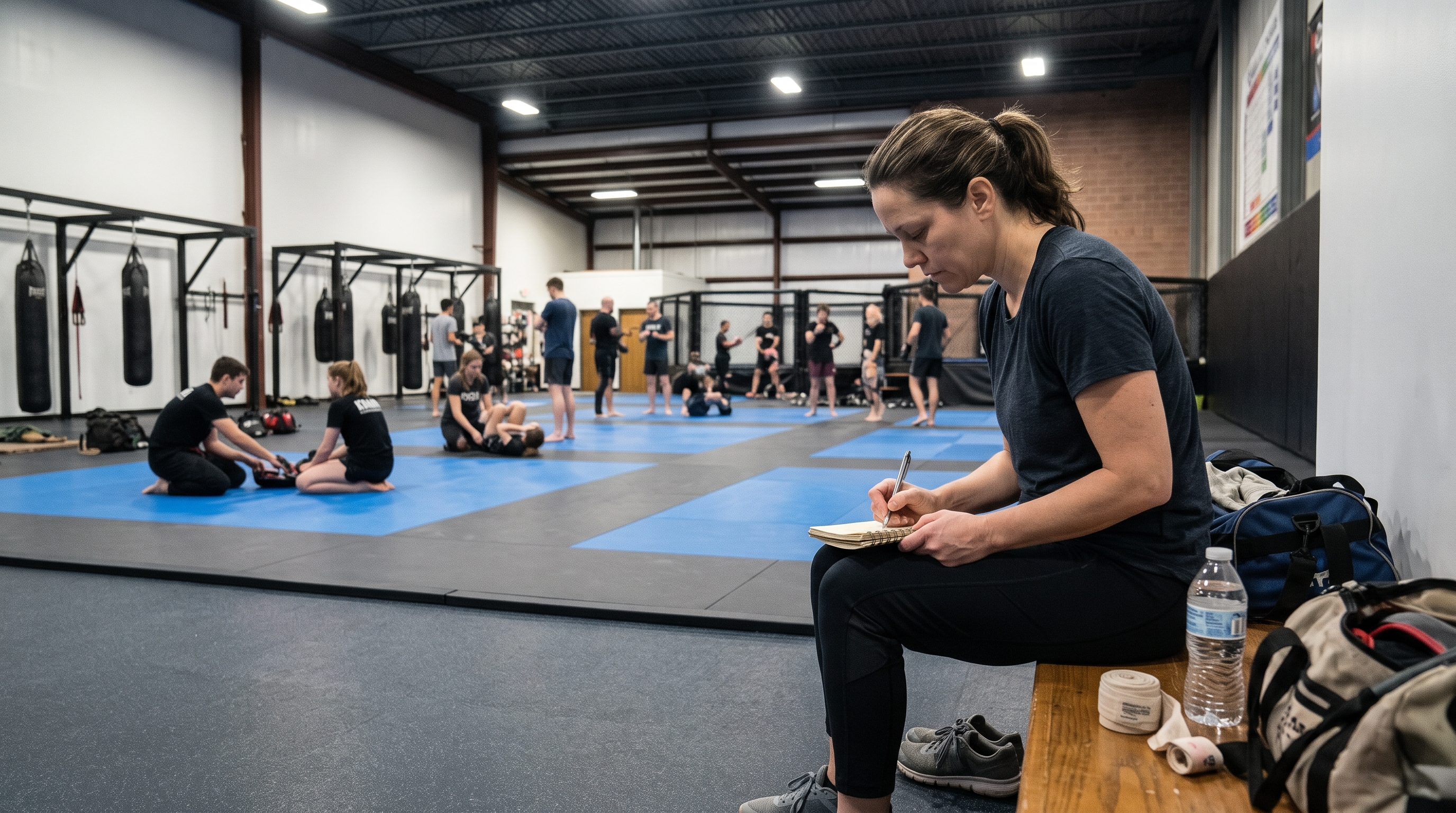
Here's the version I'd actually hand someone. Do it after class, when your breathing has slowed. Habits stick when they're attached to something you already do.
Minute one: replay the tape. Sit down and review the last day or two the way a coach reviews film. Don't hunt for big things. Hunt for small, true ones.
Minute two: write three specifics. Not "my family." Not "my health." A person, a moment, a detail. "My daughter laughed so hard at my bad joke in the car that she snorted." "My training partner told me my hips looked better." "The coffee was hot and nobody needed anything from me for ten minutes." Then add a few words on why it happened or who made it happen. That second step turns luck into relationship.
Minute three: land it. One slow breath in, a longer breath out. Notice what shows up, if anything.
The test for the whole exercise: if you can't see it like a scene in a movie, it's too general. The brain shrugs at "family." It can't shrug at a snorting daughter.
Three minutes a day is a little over eighteen hours a year. Many of us spend more than that on our phones in a single week. And on a day when you can only find one specific, write one. One true thing beats three forced ones.
You're Allowed to Find This Holiday Hard
If this week is carrying more than a turkey...
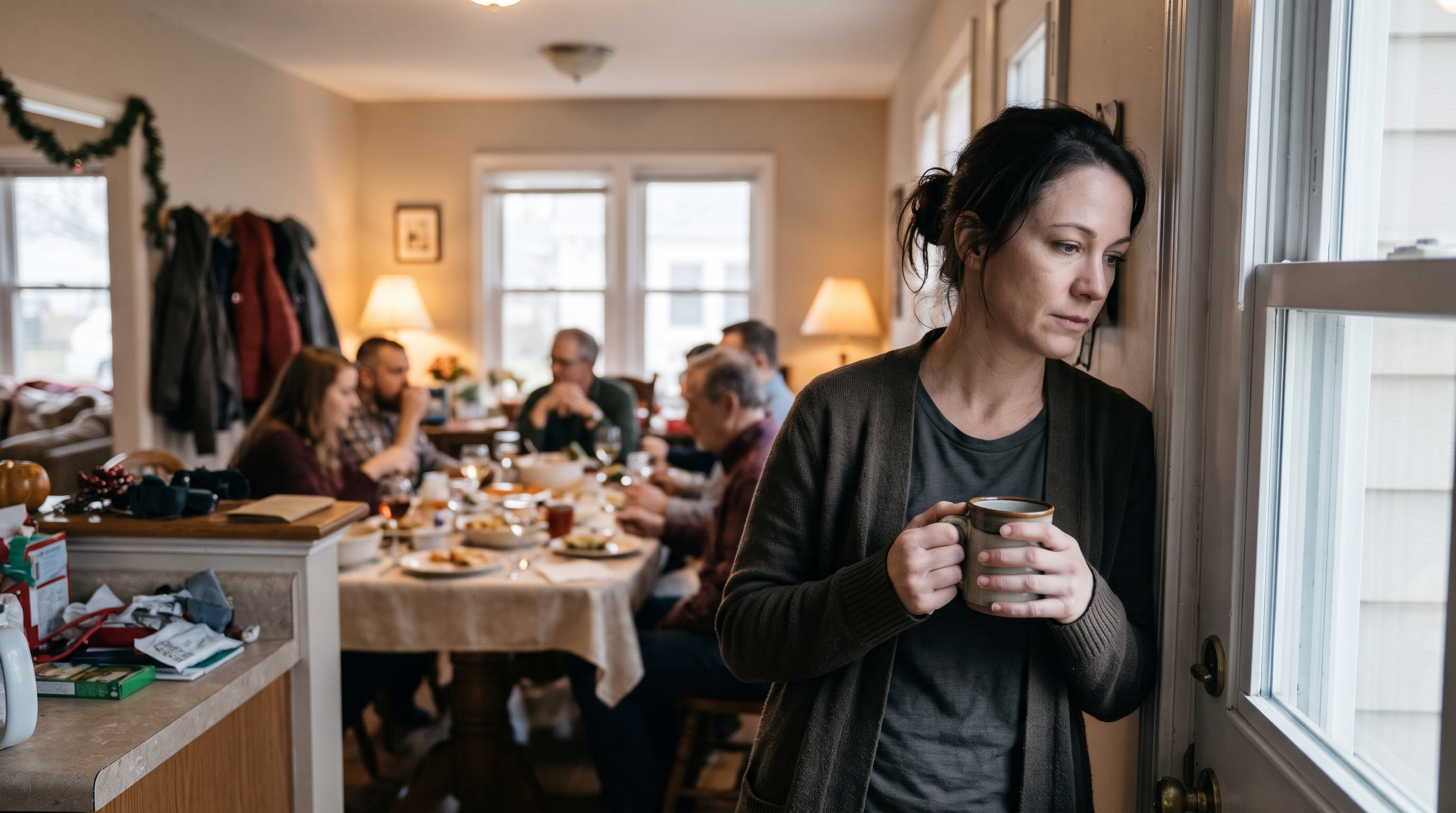
Maybe it's the empty chair. Maybe it's the family that isn't speaking, or the one table where somebody always finds your soft spot by the second glass. Maybe it's your first holiday after a divorce, a move, a diagnosis, or a layoff. Maybe money is tight and "thankful" feels like a joke at your expense. Maybe the table is full and you feel alone anyway.
Here's the permission slip, and you can tell everyone I gave it to you.
Gratitude and grief can sit at the same table. So can gratitude and anger, and gratitude and exhaustion. You never have to call a painful thing "good" in order to be thankful for something else.
You can be grateful someone was in your life and devastated they're gone. You can be glad for your family and still need to leave the room. Any gratitude that requires you to lie about the hard thing isn't gratitude. It's a performance, and performances are exhausting.
A few things gratitude is not. It is not a duty to stay quiet. It is not a debt that obligates you to tolerate mistreatment. And it is not a substitute for help. If the problem at your table is safety, that isn't a gratitude problem at all. It's a boundary problem, and you get to protect yourself without apologizing.
And if this week is heavier than hard, if you're in a dark place, please call or text 988 (in the U.S.) at any hour, or tell someone you trust today. That isn't weakness. It's the same instinct as a tap.
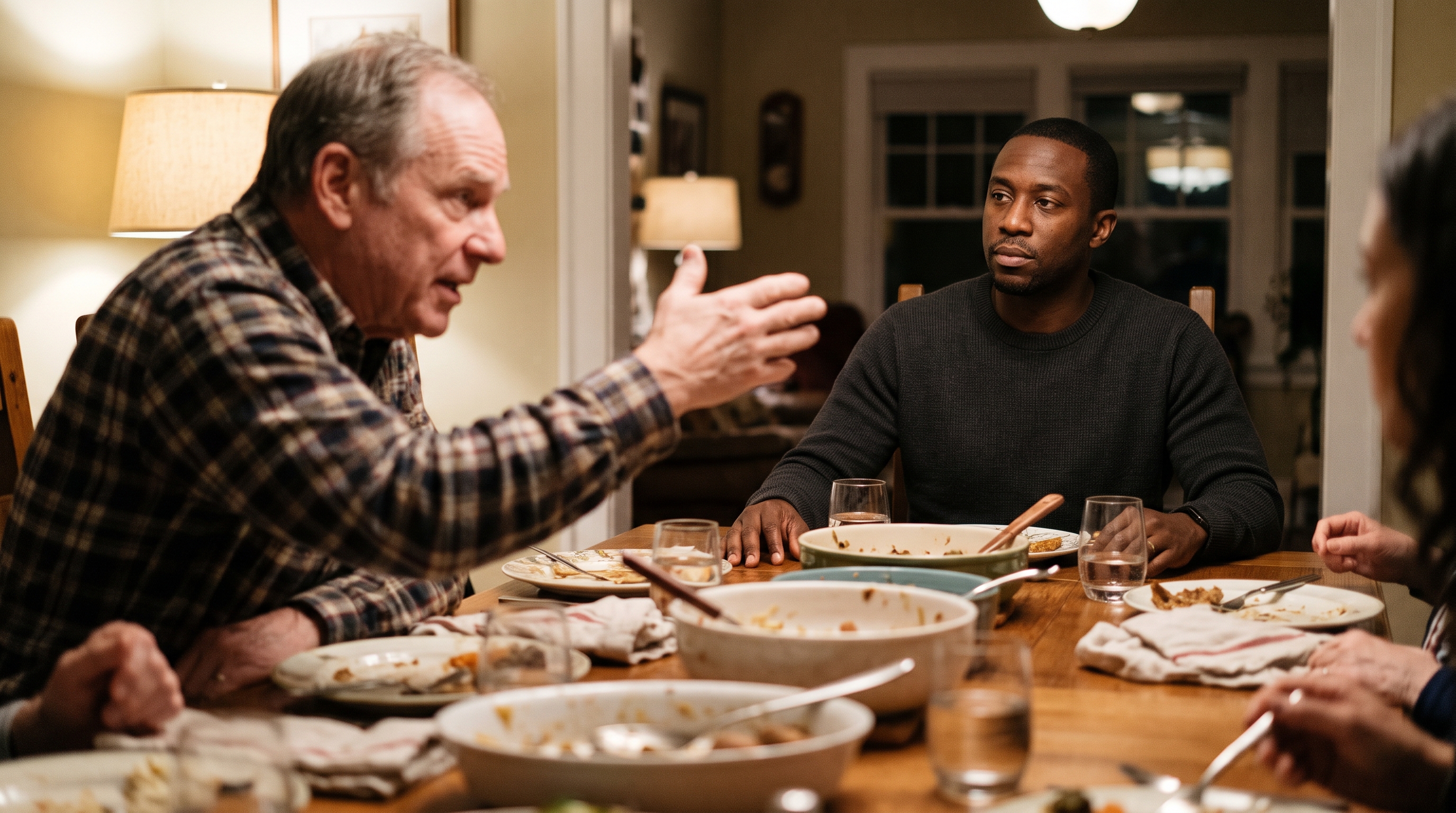
Bring the Mat to the Table
I can't promise your family will behave. I can tell you the mat teaches a set of skills for staying composed while someone is trying to put you somewhere you don't want to be. Five of them travel well.
Pick your position. Nobody wins a position they walk into blind. Arrive early and choose your seat on purpose: next to someone safe, within reach of the exit, or attached to a job like carving, dishes, or the kids' table.
Breathe on purpose. When something lands, make the exhale longer than the inhale. A 2023 Stanford trial compared five minutes a day of a pattern called cyclic sighing, a double inhale through the nose followed by a long, slow exhale through the mouth, against mindfulness meditation. The sighing group's mood improved more over four weeks. It was a small, remote, self-reported study, so I'm not selling a miracle. But it's free, it takes ten seconds, and it works in a bathroom.
Feel the grip before the move. On the mat, the tell comes before the technique: a shoulder drops, weight shifts. At the table, the tell is inside you: heat in the chest, a tight jaw, your tone creeping up. Catch it at "I'm being pulled" instead of after you've said the thing. Name it silently: there's the grip. That half-second is where choice lives.
Label, don't fight. This is Chris Voss's tactical empathy. Instead of arguing with a comment, name the feeling underneath it: "It sounds like you're worried about me." "It seems like this matters a lot to you." You haven't agreed, and you haven't taken the bait. You've shown you heard it, and most of the heat leaves. To change direction, ask a question that's safe to say no to: "Would it be terrible to pick this up after dinner?"
Tap early. In training, a tap isn't losing. It's how you come back tomorrow. At the table, a tap is stepping outside, walking the dog around the block, or going to help in the kitchen. Your ego says stay and win. There is no scoreboard at dinner.
The mat tells the truth: composure isn't the absence of pressure. It's what you do while pressure has its hands on you. And integrity is what you do when you don't know what to do. If Thursday gets complicated, take a breath, name the grip, and do the next honest thing.
Your Plan for Thursday
Short enough to remember with a mouth full of stuffing:
Tonight or after your next class: three specifics, three minutes.
Thursday morning: do it again, before anyone else is awake or needs anything from you.
At the table: say one specific thing out loud to one person. Not "I'm thankful for you all." Try "I remember the way you showed up when ___."
Take every permission slip above that you need: arrive late, leave early, breathe in the bathroom, take the walk.
Gratitude isn't a feeling you sit around waiting for. It's a rep you take, on the good days and the hard ones, until the skill is yours. You've been training that attention all along. Thursday is just one more round.
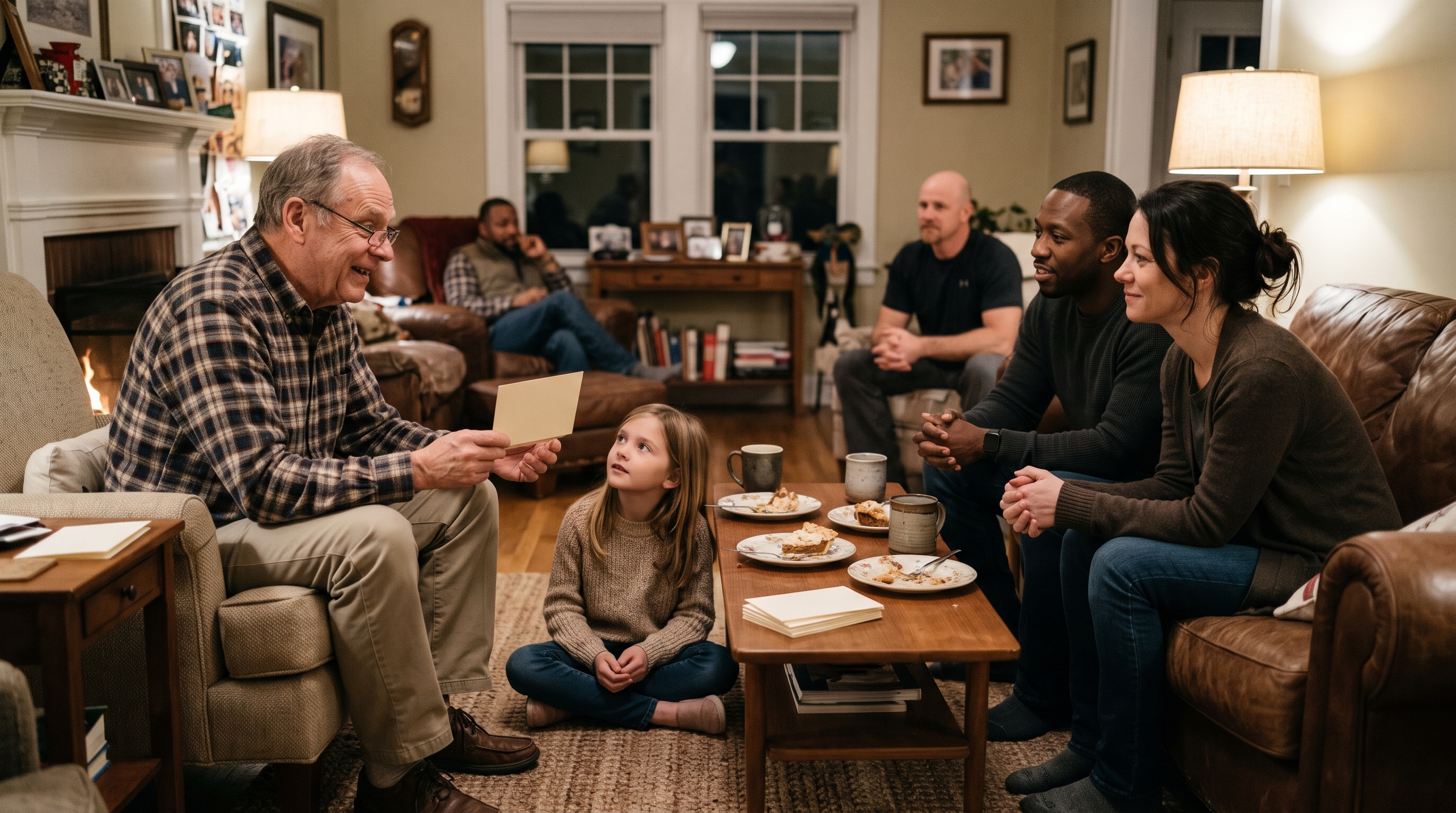
Pull a Card: Five Questions to Get to Know Your Family
At our family gatherings, we do one simple thing that changes the whole night. We keep a deck of question cards. Someone pulls a card, reads it out loud, and we go around the room, clockwise or youngest to oldest, and everybody answers. The questions are the kind that rarely get asked over pie. Good questions do what small talk can't: they give people permission to tell the story they've been carrying, sometimes for decades, because nobody ever asked.
Here are five to start your own deck. Each one works for a seven-year-old and a seventy-year-old, and each is built to pull out a story instead of a one-word answer.
What smell, song, or food takes you straight back to a place? Where are you, and who's there with you?
Tell us about a time you were braver than you felt. It doesn't have to look brave from the outside. Nobody else may even know.
Who helped you when you really needed it, and have you ever told them what it meant? What would you say if you could?
What's a story from your life that you've never told anyone at this table? Small counts. Getting lost at the fair counts.
What's something you wish someone had asked you a long time ago? Now's your chance.
These ground rules make the round work:
Everyone answers the same card. Youngest to oldest has a bonus: the kids go first and keep it honest, and the adults loosen up because nobody has to follow a polished answer.
Passing is allowed. Anyone can pass and come back at the end, no explanation needed.
No cross-examination. No fact-checking someone's memory, no fixing, no "that's not how it happened." A story is a gift, not testimony.
Label, then thank. When someone finishes, try "It sounds like that meant a lot to you," or a plain "thank you for telling us."
If a heavier story comes out, thank them, keep your face kind, and offer to talk one-on-one afterward. A round of cards is a door, not a therapy session. And if you're holding a story you've never told, Thursday might be the table. You're allowed to pass, and you're allowed to tell it.
If you've been meaning to start training, start here: two classes for $20 at [knoxmma.com]. It isn't a free trial. It's a real start.
Knoxville Martial Arts Academy has spent 27 years building people who stay composed under pressure, on the mat and off it. Happy Thanksgiving from all of us. Whatever your table looks like this year, you're welcome at ours.
