How to Choose an Gym (Even If It's Not Ours) - Copy
How to Choose an MMA Gym
(Even If It's Not Ours)

You've decided you're doing this.
Maybe it's the fear-and-adrenaline pull of combat sports finally winning out over the part of you that keeps making excuses. Maybe a friend dragged you to a class, and you can't stop thinking about it. Maybe you just watched a fight card and something primal woke up. Whatever got you here, you're past the "should I" question. You're on to "where."
And that's actually the harder question, because here's what nobody tells you before you Google "MMA gym near me" for the first time: the gap between a great gym and a bad one is enormous, and almost nothing about the outside of the building tells you which one you're walking into. Bad gyms have nice mats too. Bad gyms have flashy Instagram pages too. Bad gyms sometimes have a former champion's name on the wall.
So I'm going to do something most gym owners won't do. I'm going to tell you exactly how to evaluate any gym — including gyms that aren't mine — so that whatever you choose, you're choosing with your eyes open instead of your wallet first.
I can do this because I've spent 27 years watching what separates the gyms that produce confident, capable, safe athletes from the gyms that produce injuries, dropouts, and bad memories. And I'll be honest with you about something else: I'm not worried about handing you this checklist. I've built this gym against every single criterion on it for 27 years. If you use this list honestly, you'll end up somewhere good — and there's a real chance that somewhere is us. But that's for you to find out, not for me to convince you of.
Fair enough? Let's get into it.
Criterion One: Coaching Credentials — Not the Kind You Think
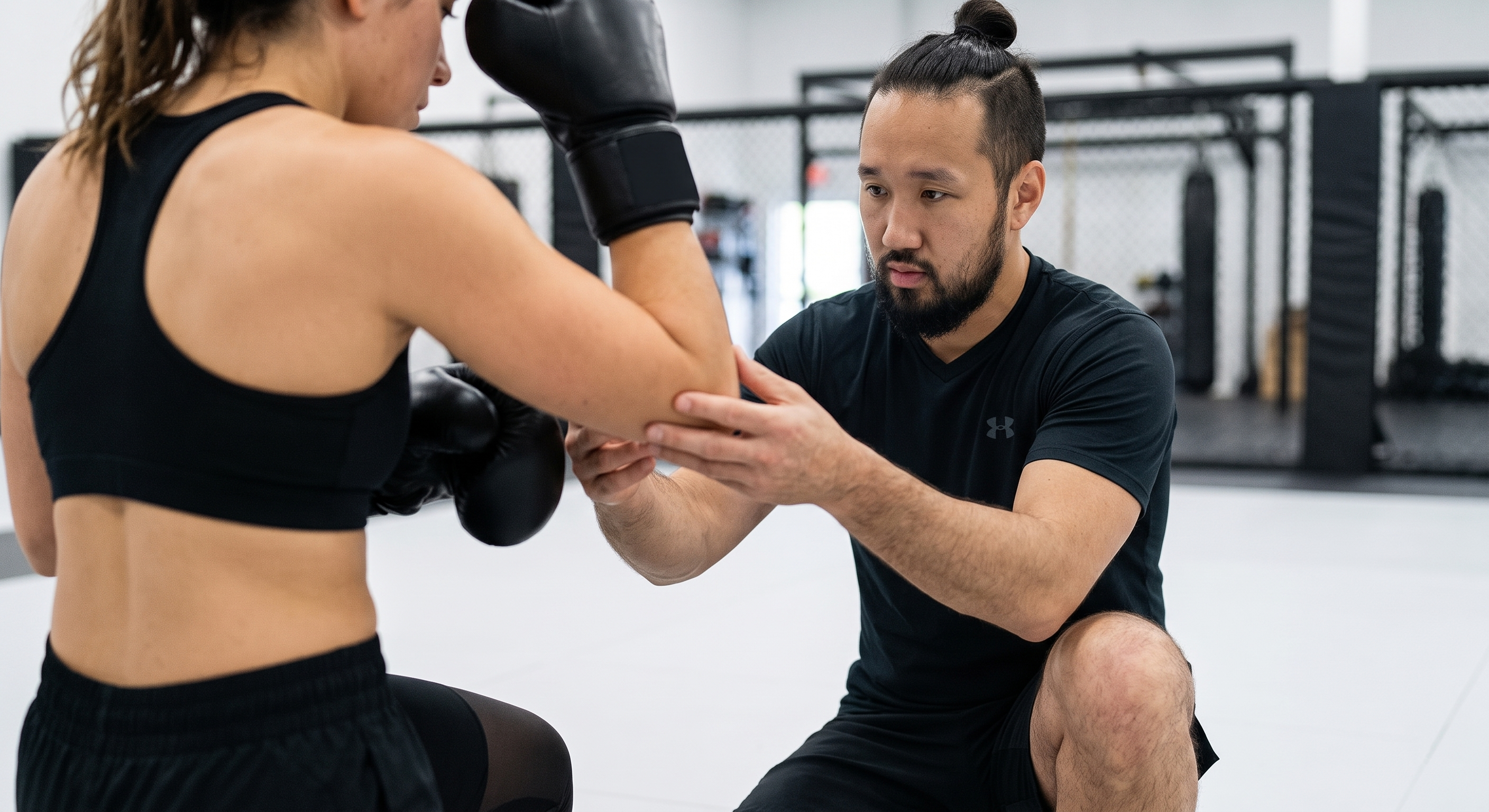
It sounds like most people walk in and ask "have they fought professionally?" as their main filter. I understand the instinct — you want to learn from someone who's actually been in there. But here's what 27 years of coaching has taught me: being a great fighter and being a great teacher are two almost entirely unrelated skills. Some of the most gifted fighters I've ever known couldn't explain what they do well enough for a beginner to replicate it. And some of the best coaches I know never had a notable competitive career at all.
So ask better questions than "did they fight." Ask these instead:
How long have they been coaching, specifically — not just training? Coaching is a distinct discipline built over years of watching bodies fail to do things and figuring out why.
Do they hold any formal certifications beyond their own belt rank? Strength and conditioning credentials, safety certifications, youth coaching certifications — these signal a coach who's invested in the teaching craft itself, not just their own athletic résumé.
Can they explain a technique three different ways? A real teacher can adjust an explanation on the fly for a stiff 50-year-old, a hyper-flexible teenager, and someone recovering from a shoulder injury. If a coach only has one explanation and it's "just do it like this," that's a red flag, not a training style.
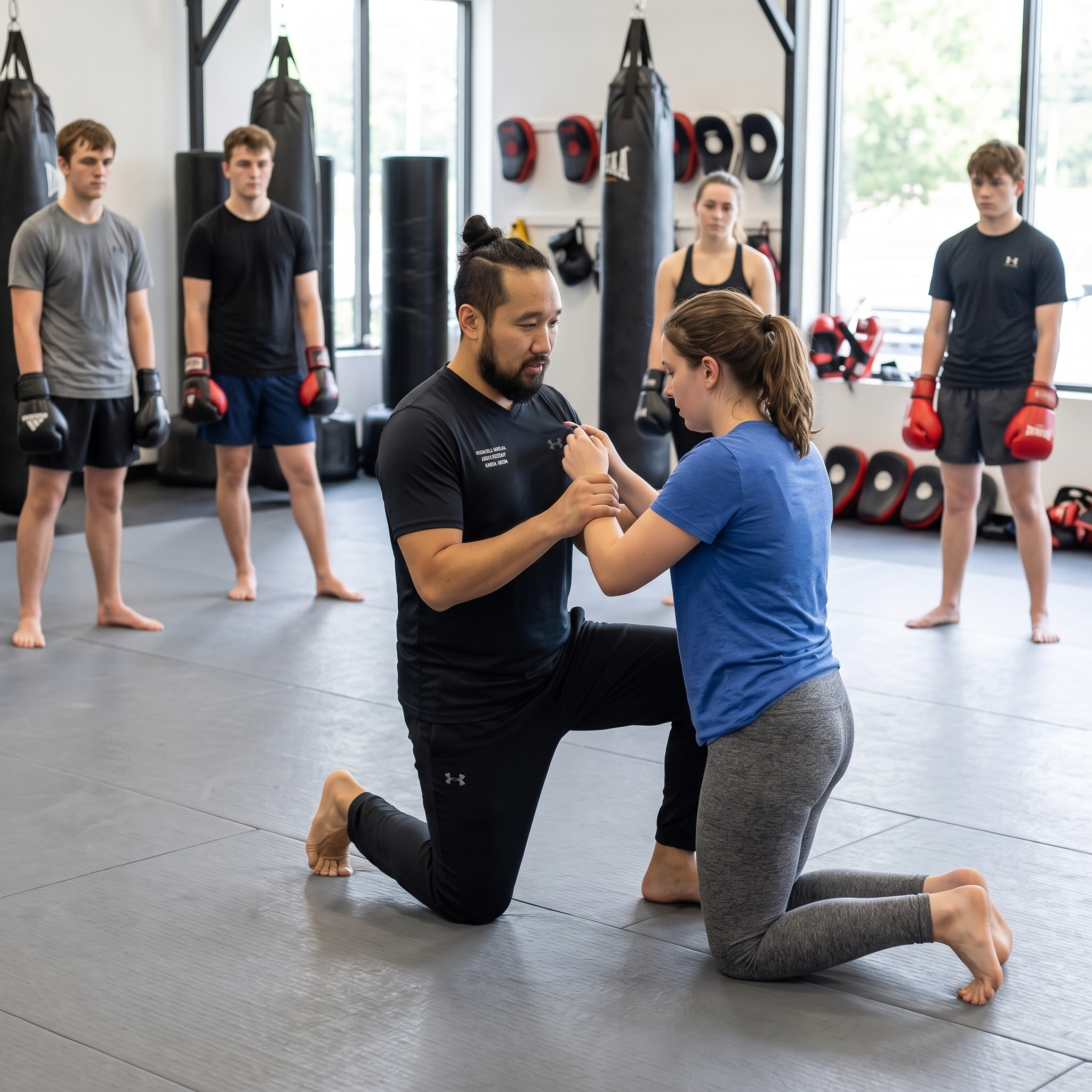
Do they coach the beginner classes themselves, or hand those off entirely to whoever's available? How a gym treats its newest, most vulnerable members tells you everything about its actual priorities versus its marketing.
Here's the math on this one: a gym with a flashy record and a mediocre teaching staff will get you hurt or bored within six months. A gym with a genuinely excellent teaching culture will get you skilled within six months —regardless of whose name is on the sign. Credentials on a wall are a story. Credentials in the classroom are a fact. Go find the fact.
Criterion Two: Safety Culture — The Thing Almost Nobody Asks About
This is the one that should scare you a little, because it's the one almost every prospective member skips entirely. You'll ask about class times, pricing, parking. You will not, unless someone tells you to, ask the question that actually determines whether you get hurt: "What is your actual system for keeping people safe?"
Not "do you care about safety" — every gym will say yes to that, and most of them mean it sincerely. The question is whether "we care" has been translated into an actual, enforced, structural system, or whether it's just a vibe everyone's hoping holds.
Here's what to actually ask, and what a real answer sounds like:
"What's your policy on new members and sparring?" A gym with a real safety system has a defined on-ramp — weeks or months of technical development before live sparring, clear criteria for readiness, not "whenever you feel ready" left entirely up to a nervous beginner who doesn't want to look scared.
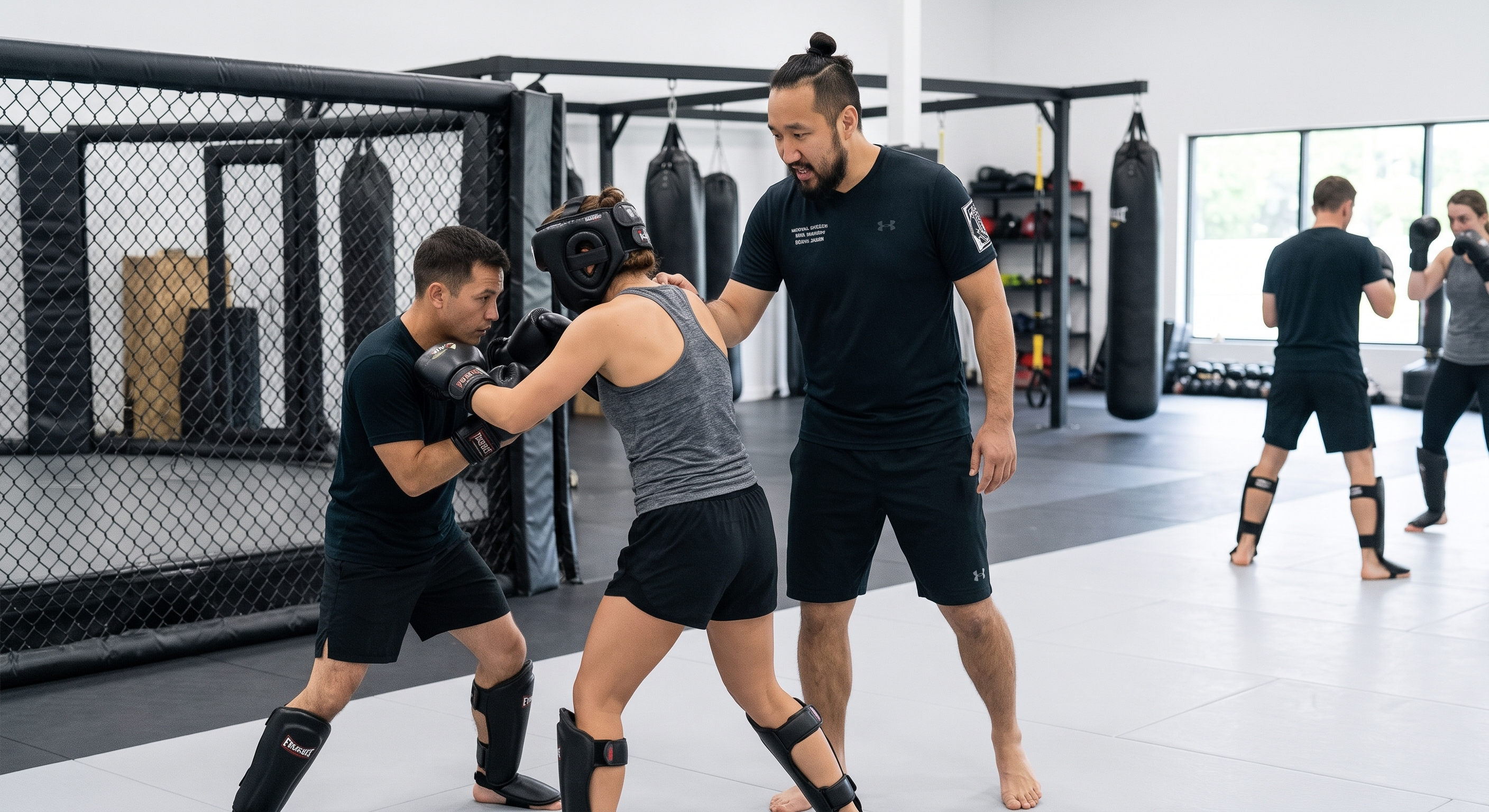
"How do you handle power imbalances in sparring?" Size, experience, and intensity mismatches are where injuries actually happen. A gym that's thought this through will have real answers — controlled intensity levels, coach-supervised pairing, a culture where going too hard on a smaller or newer partner is treated as a real violation, not just bad etiquette.
"Do you have any formal safeguarding or misconduct policies, especially involving minors?" This question makes some gym owners visibly uncomfortable, and that discomfort is itself information. Combat sports involve physical contact, close relationships between coaches and students, and real power differentials — the exact conditions that, unmanaged, create risk. A gym that has proactively built structure around this — modeled on the same safeguarding standards used in Olympic sport — is a gym that takes your safety seriously before anything ever goes wrong, not just after.
"What happens when someone gets hurt?" Ask if there's a real protocol — first aid certified staff on the floor, a clear injury reporting process — or if the answer is a shrug and "we've been lucky so far."
Here's the uncomfortable truth: "we've never had a serious problem" is not the same as "we have a system that prevents serious problems." One is luck. The other is architecture. Luck runs out. Ask which one you're actually being sold.
Criterion Three: How Sparring Is Actually Managed
This deserves its own section, separate from general safety culture, because it's the single biggest predictor of whether your first year of training builds you up or breaks you down.
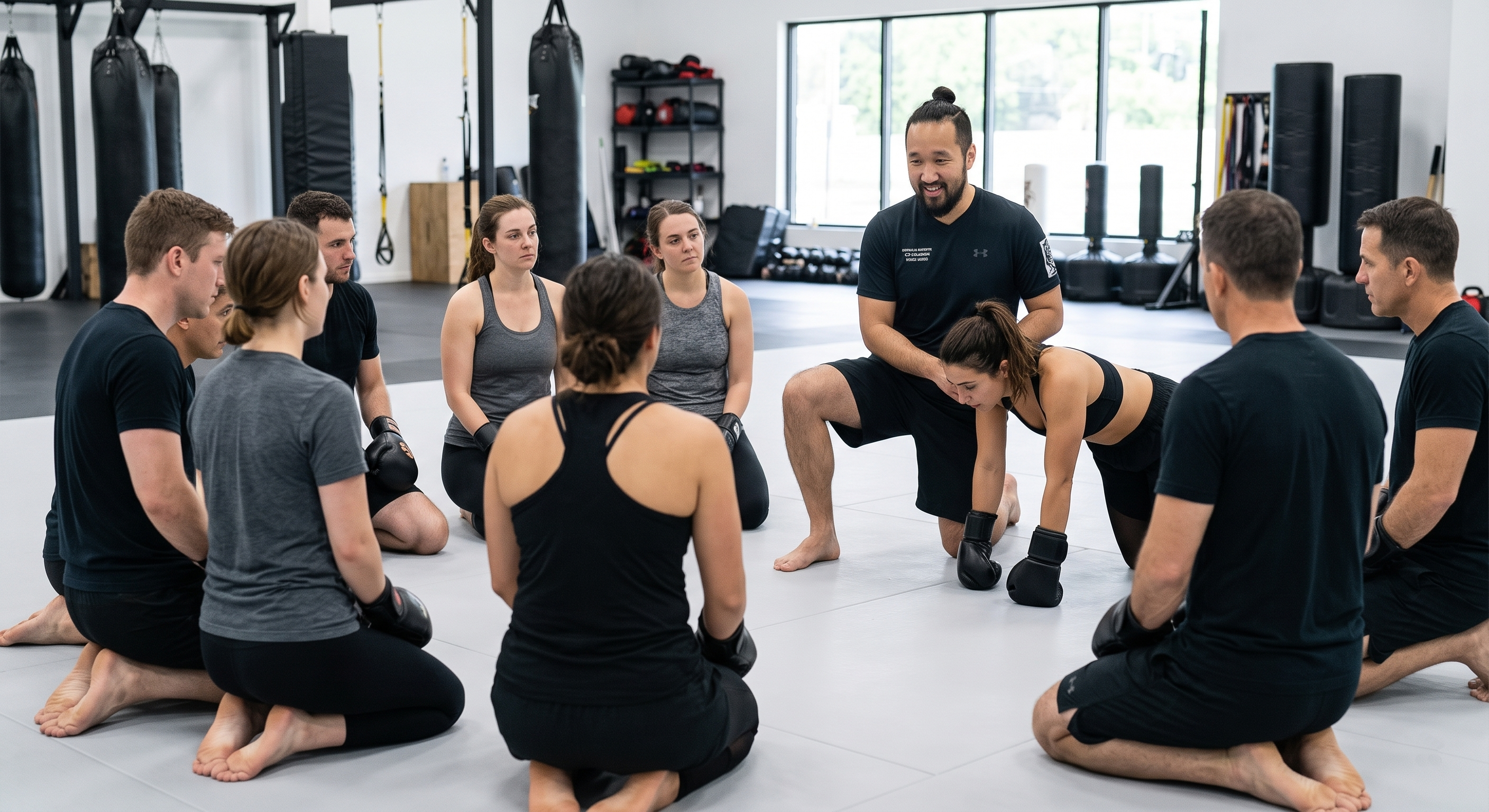
It sounds like sparring is just "the part where you fight for practice." It's actually the single highest-leverage moment in your entire training experience — the place where confidence either compounds or collapses, where injuries either get prevented or created, and where you find out in the first thirty seconds whether this gym's culture is what it claims to be on the website.
Go watch a live sparring round before you ever sign anything. Actually watch it — don't just take someone's word for how it goes. Here's exactly what you're looking for:
Is a coach actively present and correcting in real time, or is sparring just turned loose while the coach checks their phone by the wall?
Do partners of different sizes and experience levels spar at visibly different intensities, or is everyone going the same speed regardless of who they're paired with?
What happens when someone taps or says stop? Immediate release, every time, no exceptions, no "just one more second" — or hesitation?
How does the room react when a beginner clearly gets overwhelmed? Does a coach step in and adjust the pairing, or does the room let it play out because "that's how you learn"?
Here's the math on this criterion specifically, because it's the one with the highest stakes: a poorly managed sparring culture can cost you months of recovery from a preventable injury, or worse, it can cost you the confidence that got you walking through the door in the first place — and confidence, once broken early, is far harder to rebuild than any physical injury. A well-managed sparring culture costs you nothing but normal training soreness and compounds, every single week, into real skill and real calm under pressure. Same activity. Radically different return, depending entirely on how it's run.
Criterion Four: What Happens in the First Five Minutes You Walk In
This one is fast to evaluate and almost impossible to fake.
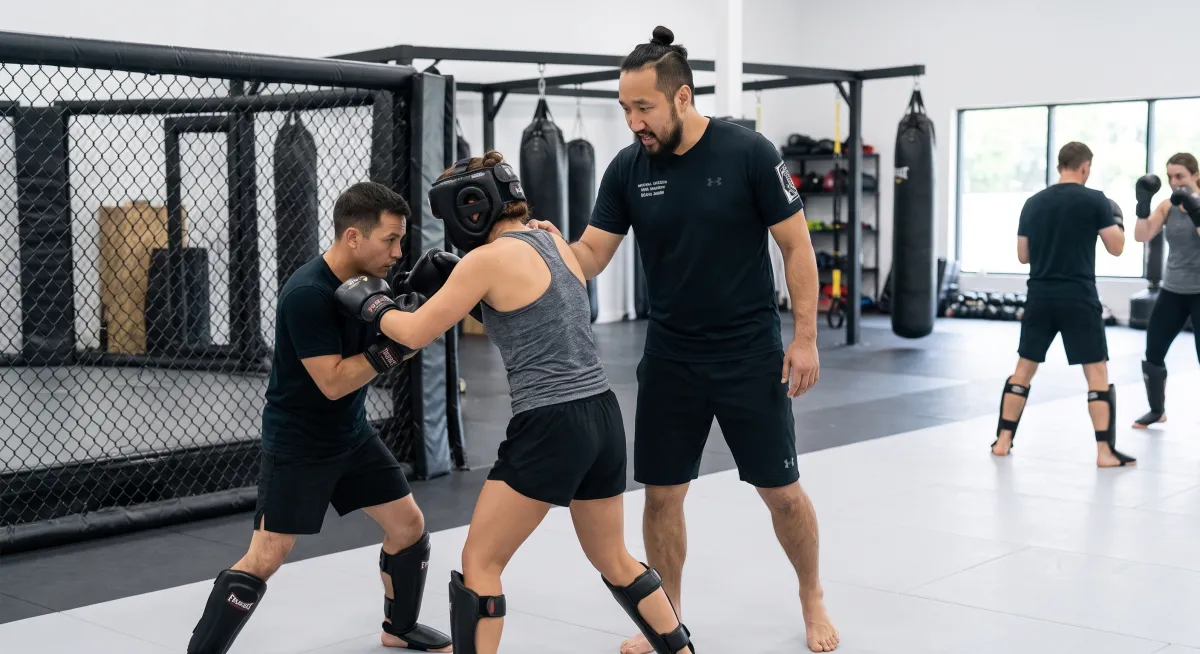
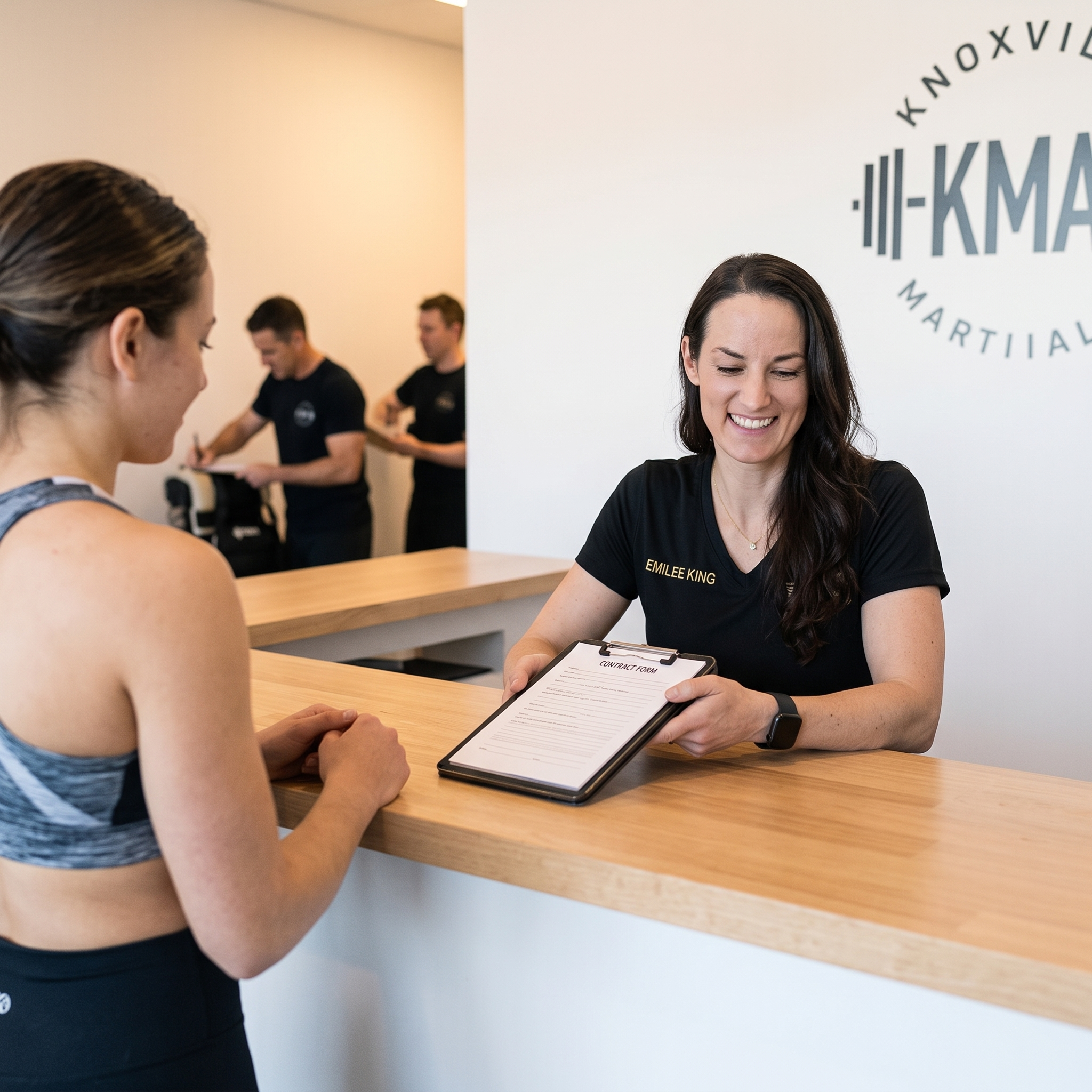
Walk in unannounced - or walk in for a scheduled trial - and pay attention to the first five minutes. Does someone greet you and learn your name, or do you stand around waiting to be noticed? Do they ask about your goals, your body, any injuries or concerns — or do they point you at a rack of gloves and say "jump in"? Is the front desk person trying to close you on a membership before you've done a single class, or are they trying to figure out if this is actually a good fit for you?
It sounds small. It isn't. How a gym treats you in your first five minutes as a total stranger is the most honest data point you'll get about how they'll treat you as a member a year from now, because a gym that's built a real culture of care doesn't turn that care on for members and off for prospects. It's not a switch. It's either baked into how the room runs, or it isn't there at all.
Criterion Five: Does the Room Feel Like Somewhere You'd Actually Return To?
Last one, and it's the one that overrides all the others if it's badly wrong: notice how you feel in the room, physically, in your body, independent of anything anyone says to you. Tense and watched? Or focused and welcomed? Competitive in a way that feels predatory, or competitive in a way that feels like everyone's actually rooting for everyone else to get better?
You are about to spend hundreds of hours of your life in this room. The technical quality of the coaching matters enormously, but it will not matter at all if the room itself makes your nervous system want to leave. Trust that read. It's more reliable than you think.
Now Go Use This List
Here's what I actually want to happen with everything above: I want you to walk into two or three gyms — this week, not "eventually" — and run every single one of them through these five criteria out loud, in your head or literally on a notes app. Ask the uncomfortable questions. Watch a live sparring round. Pay attention to your first five minutes. Notice how the room feels in your body.
You already know you're doing this — that decision is made, or you wouldn't have read this far into an article about how to pick a gym instead of an article about whether to start at all. The only thing left is finding the right room to become the person you're already deciding to become.
Run every gym you visit through this list, including us. Come watch our beginner classes get coached. Come watch how we manage sparring. Ask us the safeguarding question and watch whether we flinch or whether we walk you through exactly what we've built. We built KMAA into the largest and most successful MMA facility in Tennessee by passing exactly this kind of scrutiny, over and over, for 27 years — and we'd genuinely rather you choose us because we earned it against a real standard than because we were the first name that came up in a search.
That's the only kind of member worth having. The kind who checked.
Knox Martial Arts Academy has been building capable, confident, safe athletes in Knoxville for over 27 years — from first-day beginners to world-class professional fighters, in the largest and most successful MMA facility in Tennessee. Come watch a class, ask us every question on this list, and see for yourself.
