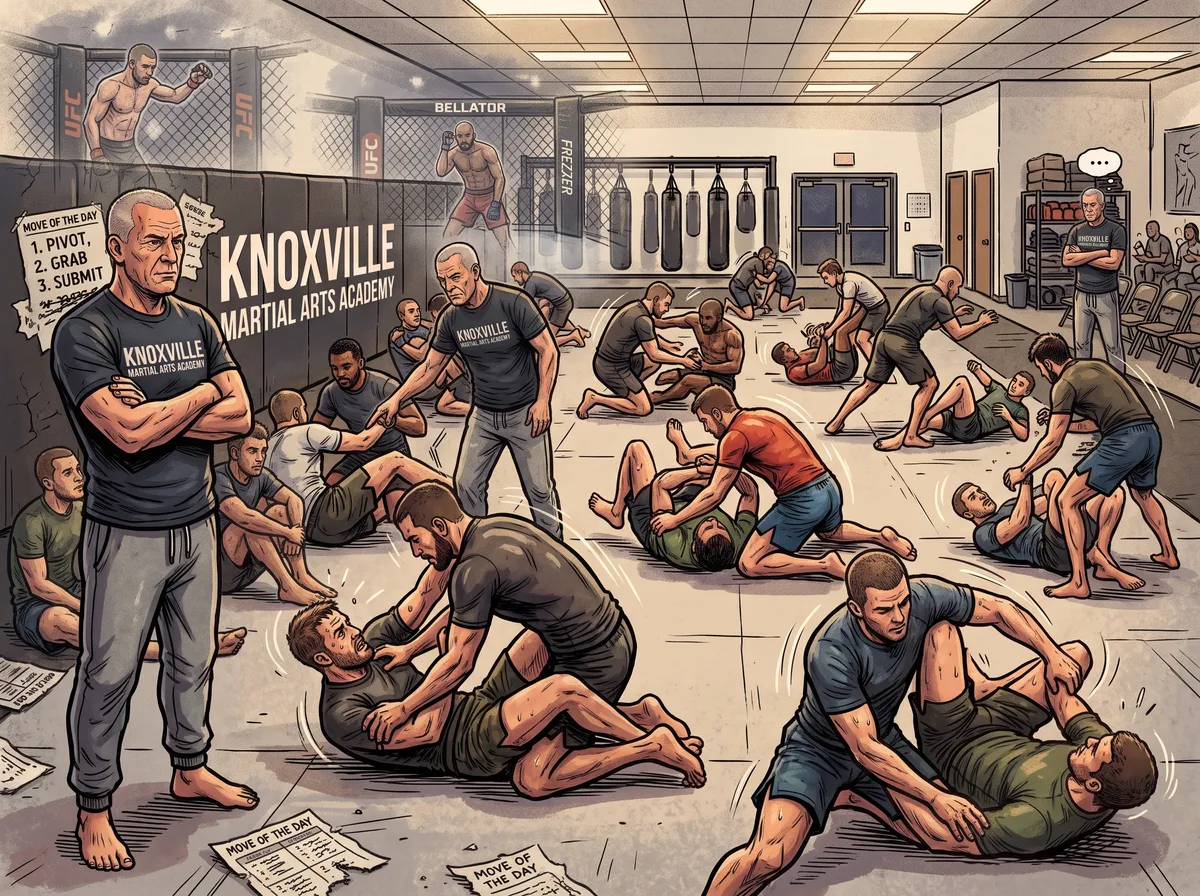
The Death of the 'Move of the Day': A Coach's Evolution
The KMAA Chronicles
The Death of the 'Move of the Day':
A Coach's Evolution
Every night for nearly thirty years, the ritual looked exactly the same. I would call the room to attention, step to the center of the mats, and deliver the promised choreography. Here is where you place your hand. Here is the angle of your pivot. Execute these three steps, and the submission is yours. For the students, it offered the comforting illusion of certainty—a neat, consumable package of immediate competence. For the coach, it provided the ultimate shield of authority. This prescriptive blueprint, the sacred "Move of the Day," is the pedagogical bedrock of the global martial arts industry. But deep down, as I watched athletes drill these sequences to aesthetic perfection, a quiet, terrifying realization began to take root.
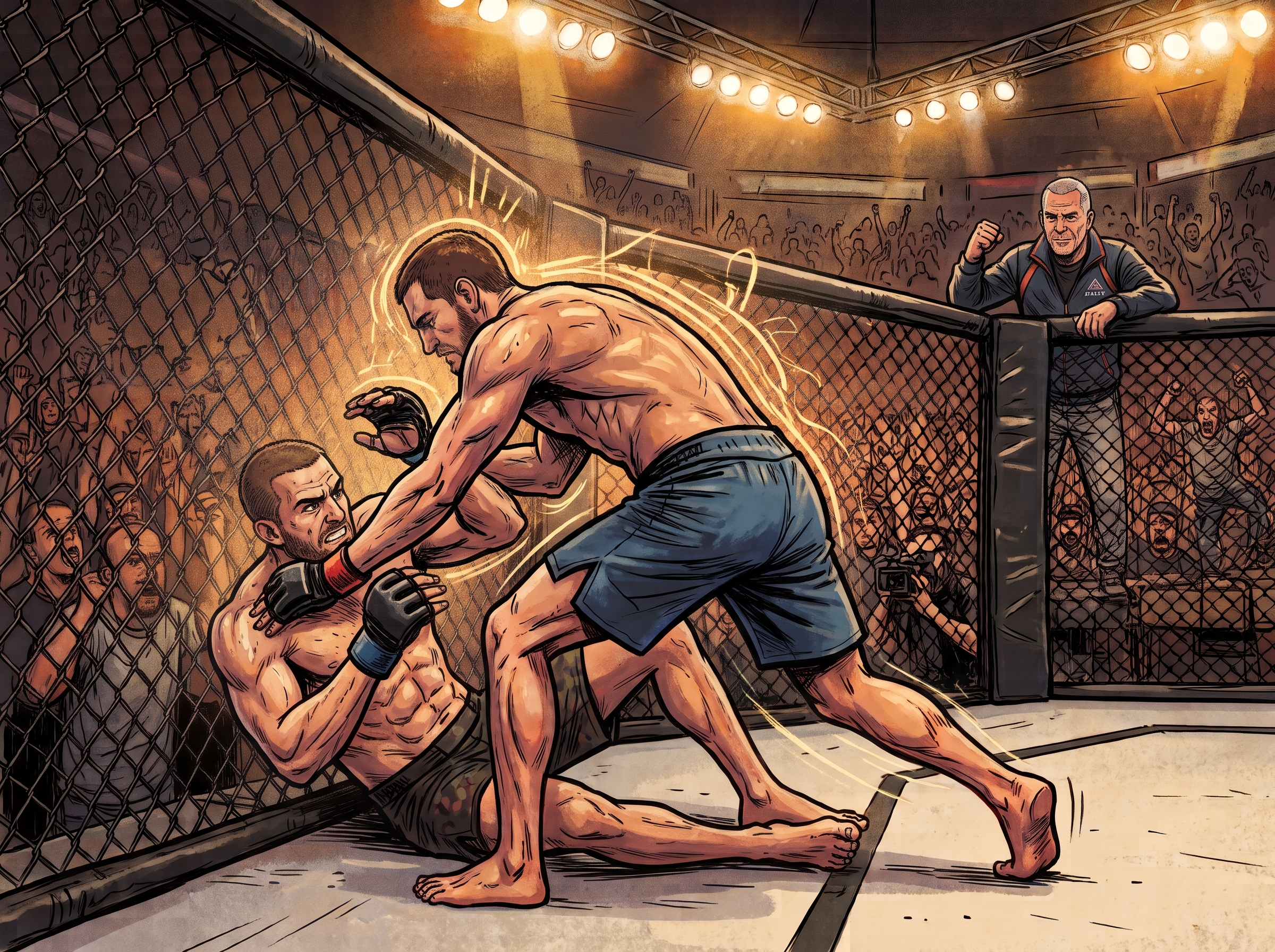
The cracks in the foundation didn't show up during compliant drilling; they appeared under the chaotic lights of the cage. Cornering fighters at the highest levels of the sport—from local East Tennessee events all the way up to the UFC and Bellator—I watched the rigid architecture of rote memorization collapse upon contact with a living, breathing, actively resisting opponent. When an opponent's weight distribution was slightly off or the adrenaline dump shattered an athlete's fine motor skills, their mental filing cabinet slammed shut. They possessed a massive rolodex of specialized moves, but they had beautifully rehearsed lines for a script their opponent had no intention of following.
Tearing down that illusion has been the most difficult and necessary evolution of my entire coaching career. Admitting that the traditional "I show, you copy" model is a beautifully constructed lie requires a massive surrender of ego. It means looking at the walls of an academy you spent decades building and telling your students that there is a better, significantly more frustrating way. To build truly adaptable, resilient problem-solvers, we had to stop handing out maps to a calm ocean and start teaching them how to navigate the hurricane. We had to kill the Move of the Day.
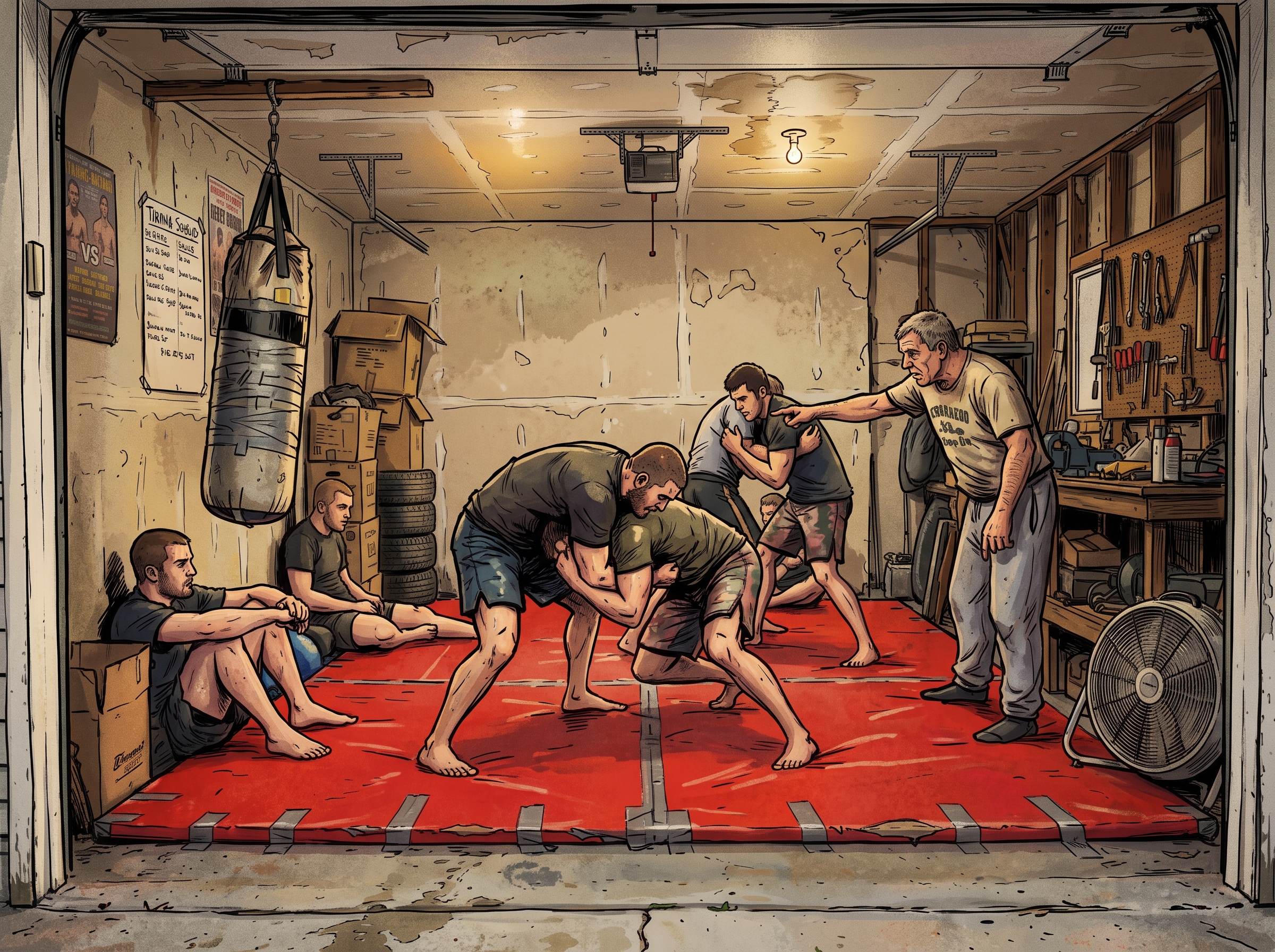
The Early Days: Garage Gyms and the Illusion of Control
To understand why the prescriptive model is so deeply entrenched, you have to look at how modern combat sports evolved. When I first started out, martial arts instruction was largely a game of telephone. We trained in sweltering garage gyms and bare-bones facilities, passing down techniques exactly as they were handed to us. The instructor was the ultimate authority, the sole dispenser of knowledge. If a technique didn't work for you, the assumption wasn't that the technique was flawed, or that it didn't fit your body type—the assumption was that you just weren't doing it right. You needed more reps.
In those days, the "I show, you copy" model seemed to work perfectly fine. We produced tough fighters. We won matches. But in hindsight, we were succeeding in spite of our teaching methods, not because of them.
The athletes who thrived in the old prescriptive system were simply the ones who were naturally athletic enough, or stubborn enough, to force a square peg into a round hole. It was an environment of attrition. We would drill a specific armbar from closed guard a thousand times, ingraining the exact motor pattern into our nervous systems. We felt incredibly sharp. We felt like we possessed a massive rolodex of specialized weapons, ready to be deployed the moment the bell rang.
The problem was, we were training in a vacuum. We were practicing our lines for a play without realizing the other actor had a completely different script.
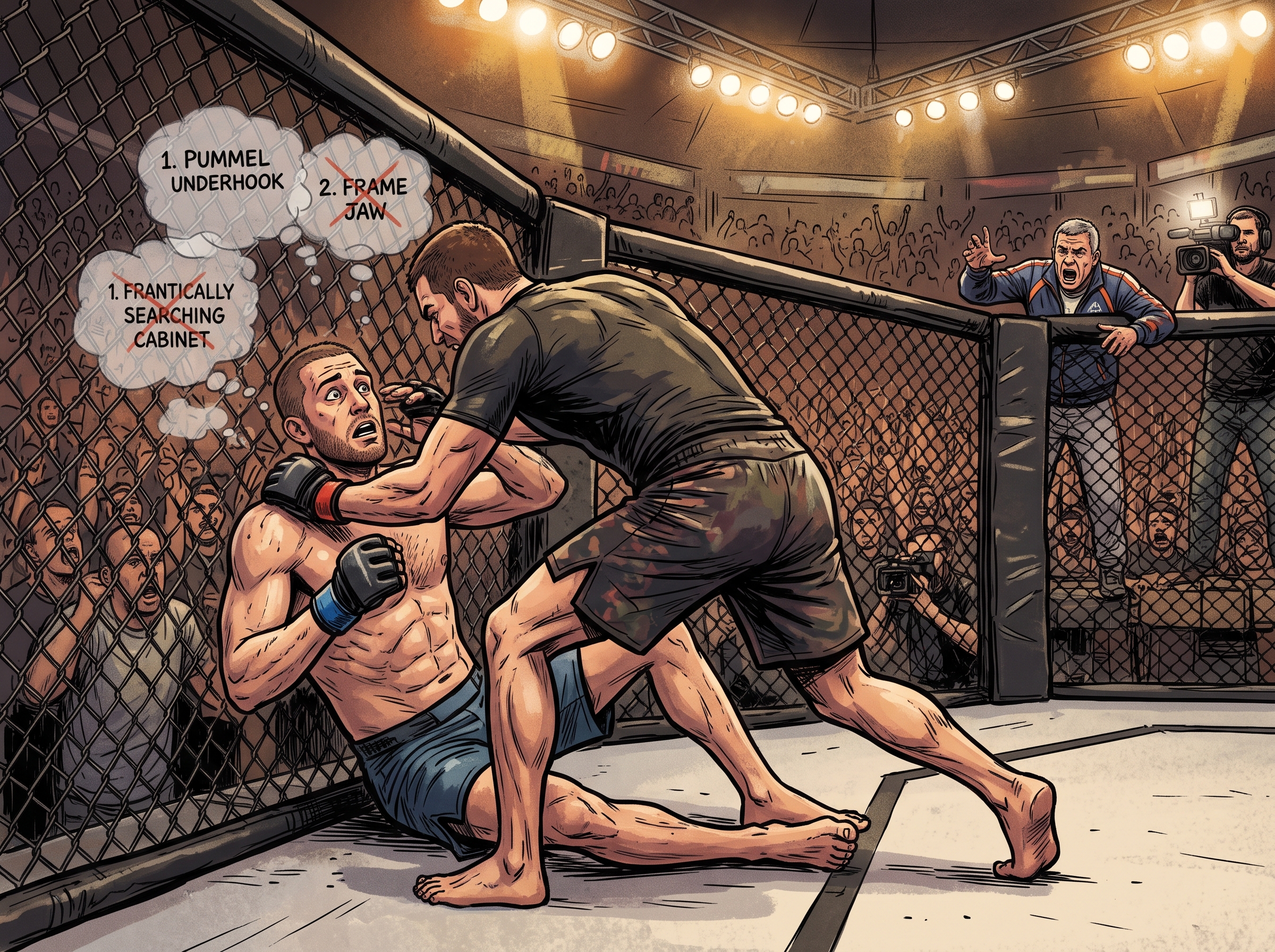
The Tipping Point: When the Map is Not the Territory
The cognitive dissonance began to creep in during competition. I would corner an athlete—someone who looked like a world-beater in the gym, someone whose technique was aesthetically flawless during drilling—and watch them completely unravel under the chaotic lights of the cage or the tournament mat.
I distinctly remember the turning point. An athlete I had spent months preparing for a major promotion fight was backed against the cage. We had drilled the exact escape for this scenario endlessly. I had given him the blueprint. Pummel the underhook, frame the jaw, circle out. But when the moment arrived, his opponent didn’t react the way his drilling partners had. The opponent's weight distribution was slightly off, the angle of the pressure was different, the physiological reality of the moment shattered the rehearsed sequence.
My fighter froze. His brain frantically searched its filing cabinet for the exact technique we had practiced, but because the starting conditions weren't identical to the drill, the file wouldn't open. He absorbed unnecessary damage, and we lost the position.
It wasn't an isolated incident. I began auditing my classes with a more critical eye. I watched students who could perform a beautiful, ten-step passing sequence on a static partner turn into stiff, uncoordinated novices the moment live sparring began. They were waiting for their opponent to give them the specific cue that started their rehearsed sequence. When that cue never came, they had no ability to improvise.
They possessed moves, but they didn't understand movement.
Combat is inherently chaotic. It is a highly complex, non-linear environment where two dynamic, resisting human bodies are constantly exchanging physical information. Teaching an athlete to survive that chaos by handing them a rigid set of step-by-step instructions is like trying to teach someone to navigate a hurricane by giving them a map of a calm ocean.
I realized that my job wasn't to download techniques into my students' brains. My job was to teach them how to solve physical problems in real-time. I had to kill the Move of the Day.
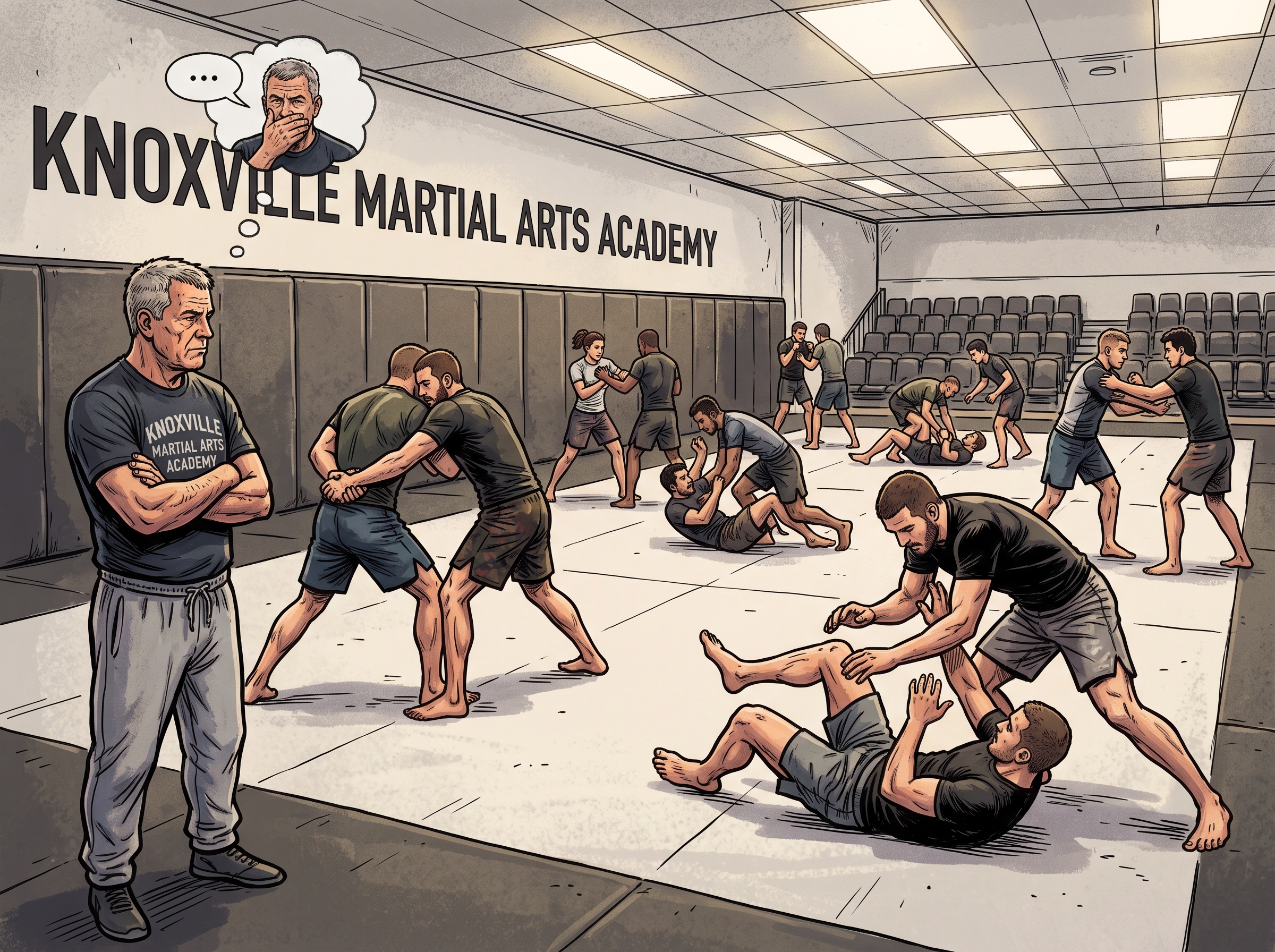
Stepping into the Void: The Paradigm Shift
Admitting that the methodology you’ve utilized for decades is fundamentally flawed requires a massive swallowing of ego. It means looking at the walls of your academy, looking at the athletes who trust you, and saying, "There is a better way, and it's going to make us all deeply uncomfortable for a while."
The shift to the Constraints-Led Approach (CLA) and Ecological Dynamics is not a trendy coaching hack. It is a complete philosophical tear-down. In the ecological framework, we abandon the idea that there is one "correct" way to perform an action. Instead, we recognize that human movement is governed by universal, physical invariants—things like base, posture, leverage, and center of gravity.
Rather than explicitly telling a student where to put their hands and feet, the coach's role transforms into that of an environment designer. We manipulate the task, the environment, or the organism to create a specific problem, and we force the athlete to find their own physical solution.
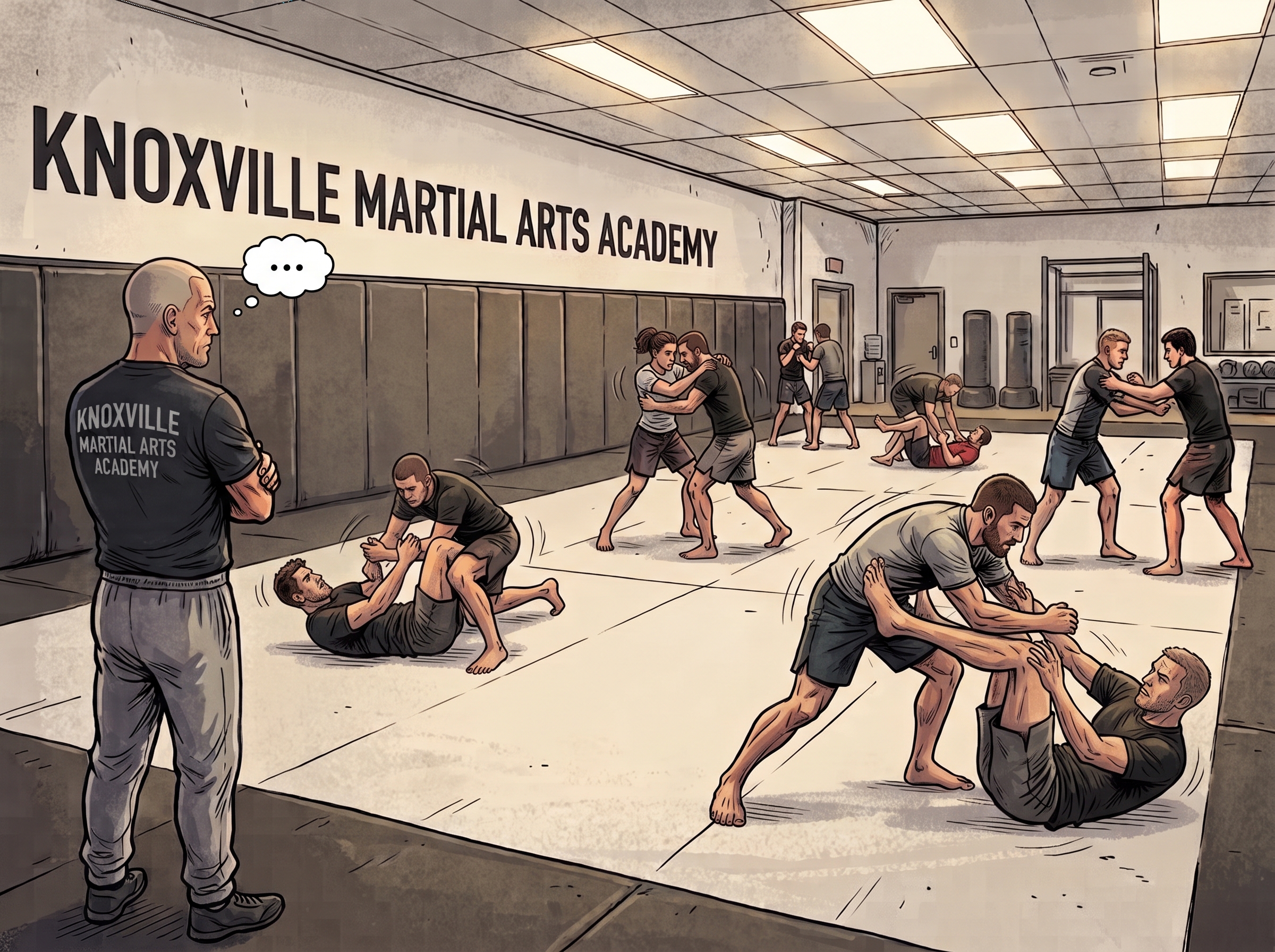
The first time I structured a class this way, I was terrified. Instead of gathering everyone around for the traditional demonstration, I set up a live, situational game. I paired the athletes up, gave them a highly specific constraint—such as restricting one partner from using their grips, or forcing them to maintain a specific boundary—and told them the goal.
Then, I shut my mouth and let them work.
The Growing Pains: Navigating the Frustration of Freedom
The transition was, to put it mildly, agonizing.
Legacy students—those who had spent years being spoon-fed techniques—were deeply confused and visibly frustrated. They would look up at me from the mats mid-round, struggling to break a posture or escape a pin, and their eyes would beg for the answer. Coach, what do I do here? Where do I put my hand?
In the past, I would have immediately halted the action, stepped in, and delivered a micro-lecture on the precise biomechanics of the escape. I would have played the savior. But under the ecological model, providing the explicit answer robs the athlete of the learning process. It breaks the perception-action coupling.
My response had to change. "I don't know," I would tell them. "Where does his weight feel light? Where is his base compromised? Move there."
People hated it initially. The human brain craves certainty, and the traditional martial arts model provides an abundance of it. When you strip that away, athletes feel like they are regressing. Without the Move of the Day to mentally check off their list, they couldn't tell if they were getting better. They felt disorganized. They felt like they were drowning in ambiguity.
As a coach, the urge to intervene was overwhelming. It is agonizing to watch a student fail repeatedly at a task when you know the mechanical solution that would instantly alleviate their struggle. But I had to hold the line. I had to trust that the constraints we were designing were feeding them the right physical information. I had to let them fail, over and over, until they began to feel the invariants of the position for themselves.
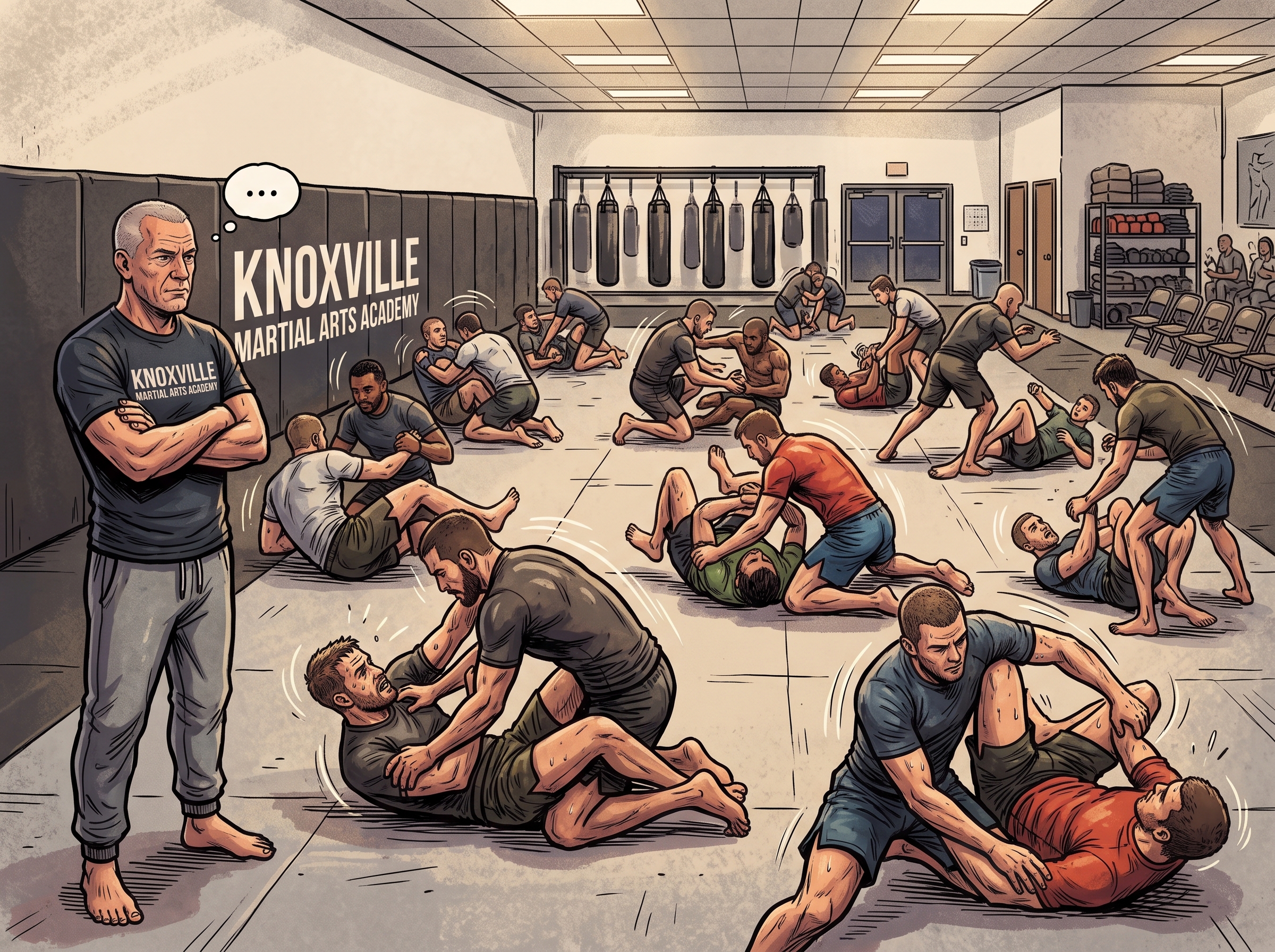
We shifted entirely toward live resistance and perception-action games. We stopped talking about "Kickboxing moves" or "Jiu-Jitsu moves" and started talking strictly about universal movement problems. We explored how a chest wrap functions exactly the same way whether you are trying to take someone down against a cage or sweep them on a mat—both arms connected, elbows pinched tightly, capturing the center of mass. We focused on attunement. We taught them to read the physical feedback of their opponent's body rather than waiting for a visual cue.
Slowly, the frustration began to calcify into resilience.
The Payoff: The Emergence of the Individual
The beauty of a seed is that you don't have to tell it how to grow; you just have to provide the right soil, water, and light. When you stop acting as a dictator of movement and start acting as a facilitator of environment, the results are breathtaking.
The breakthrough moments didn't look like an athlete perfectly replicating a sequence I had shown them. The breakthroughs looked messy, unorthodox, and entirely original.
I began to see athletes solving complex grappling and striking exchanges using micro-movements and weight shifts that I could never have explicitly taught them, because their bodies were fundamentally different from mine. A lanky, tall athlete would discover a solution to a clinch that relied entirely on skeletal framing and distance management. A short, stocky athlete would solve the exact same constraint by dropping their elevation and utilizing their low center of gravity to disrupt base.
Neither was doing the "Move of the Day." Both were expressing correct, highly efficient movement solutions based on the physical realities of their own frames and the immediate feedback of their opponents.
Because they were no longer memorizing choreography, their cognitive load during live rounds plummeted. They stopped freezing when a sequence was interrupted, because there was no sequence to interrupt. If an opponent shifted their weight unexpectedly, my athletes didn't panic; they simply perceived the new information and instantly coupled it with a new movement. Their adaptability skyrocketed. The gap between their gym performance and their competition performance evaporated.
Watching an athlete truly understand movement—watching them fluidly adapt to chaos without conscious thought—is the most profound experience I have had in my thirty years on the mats. It is the difference between teaching someone to recite a poem in a foreign language, and teaching them how to speak fluently.
Embracing the Chaos
The martial arts industry at large is still deeply tethered to the prescriptive model. It is easier to sell, easier to scale, and easier to market. The Move of the Day looks great on an Instagram reel. It provides a neat, tidy package of easily consumable content.
But fighting is not neat. Survival is not tidy.
Transitioning an academy to an ecological framework is not a path for the faint of heart. It requires a willingness to alienate students who are looking for easy answers. It requires the coach to surrender the spotlight and accept that true learning happens in the quiet, frustrating spaces between failure and adaptation. It demands that we abandon the illusion of control and trust in the profound, innate intelligence of the human nervous system.
We no longer teach techniques. We design environments. We cultivate problem solvers who are unburdened by dogma, capable of reading the physical truths of a violent encounter and responding with fluid, invariant solutions. The Move of the Day is dead, and the athletes we are building in its wake are far more dangerous, resilient, and alive.
