The Fighter Who Never Fights: What Hobbyist Members Get That Competitors Don't
The Fighter Who Never Fights:
What Hobbyist Members Get That Competitors Don't
There's a word you use when someone at work finds out you train, and I want to talk about it.
They ask if you fight. And you say — I've heard it a thousand times, in exactly this tone —"Oh, no, I just train."
Just.
It sounds like a small word. It's not. That word is carrying an entire hidden belief on its back: that the real version of this thing is competition, and what you're doing is the diet version. The practice-squad version. That somewhere in the gym hierarchy, you rank below the people with fight records, and the polite thing to do is signal that you know your place.
I've been coaching for 27 years. I've cornered professional fighters in the biggest organizations in the sport. I've built the largest and most successful MMA facility in Tennessee. So when I tell you what I'm about to tell you, understand it's not a participation-trophy speech from someone trying to make you feel included.
It's the honest accounting of a coach who has watched both paths — the competitor's and the hobbyist's — play out over nearly three decades:
You are not doing the lesser version of this. In several ways that genuinely matter, you're doing the better one.
Let me show you the ledger.

The Trade Competitors Make (That Nobody Talks About)
Here's what the highlight reels don't show you about the competitive path, and I say this with total love for my fighters, because they know it better than anyone.
Competition is a trade. A real one, with real costs on both sides of the ledger. In exchange for the glory, the test, and the undeniable rush of the walkout, a competitor hands over:
Their training menu. A fight camp is a narrowing. Eight weeks pointed at one opponent, one ruleset, one date. The competitor doesn't get to spend a month geeking out on a new guard system or wandering into a striking style that fascinates them, because everything must serve the fight. Curiosity becomes a luxury they schedule for the off-season — if there is one.
Their relationship with the scale. Weight cutting is the most miserable, least glamorous part of this sport, and it colonizes a fighter's entire relationship with food, water, and their own body for weeks at a time.
Their margin for error. Competitors have to spar harder, more often, closer to real, because the fight demands it. That's a physical bill that comes due over years, and every honest coach and fighter knows it.
The activity itself as a refuge. This is the cost nobody warns them about. The moment training becomes a job — with stakes, records, and an identity riding on outcomes — it stops being the escape and becomes another thing that can be failed at. Ask any fighter what happens to the joy during a bad camp.
None of this is a reason not to compete. For the small percentage of people built for it, the trade is worth every cost, and my job is to make sure they get maximum return on it. But notice what just happened: we named the price tag. Competition isn't the free upgrade at the top of the pyramid. It's a purchase. And it turns out you've been walking past that price tag every week without realizing that you, the hobbyist, kept all four of those things the competitor sold.
What You Keep
Now run your side of the ledger, because it seems like nobody has ever actually itemized it for you.
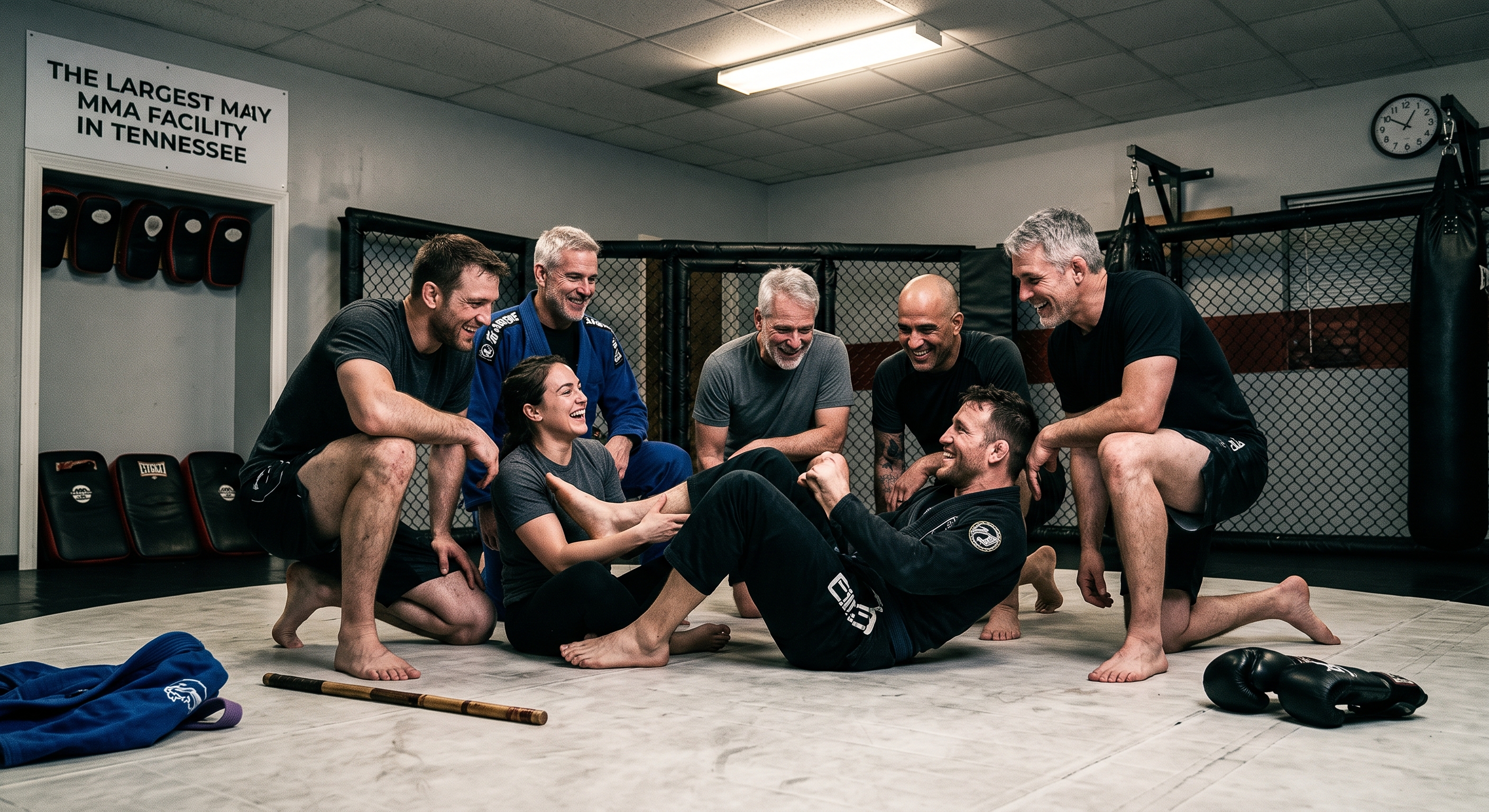
You keep the whole art. You get to be a generalist in the best sense — to spend a season falling in love with your jab, then disappear down a grappling rabbit hole for six months, then come back to clinch work because a technique you saw got stuck in your head. No camp is narrowing your menu. No opponent is dictating your curriculum. You get to study martial arts the way the art was actually meant to be studied: as a lifelong body of knowledge, not an eight-week tactical assignment.
You keep the timeline. A competitor's career is a window — a handful of prime years, and everyone in the room knows the clock is running. Your path has no clock. You can train at 35, 50, 70, adjusting intensity as your body changes, because you answer to no ruleset and no matchmaker. Here's the math that should reframe everything: a typical competitive career might span ten years if everything goes right. A hobbyist's training life can span fifty. When someone implies you're doing the smaller version of this, remember that your version is five times longer than theirs.
You keep your body's long game. You spar at intensities chosen for learning, not for war. You never cut weight. You never take a fight injured because the show's booked and the ticket sales happened. Thirty years from now, that compounds into something the ledger can't fully capture: a body that still works, still moves, still wants to get on the mat.
And you keep the refuge. That hour where your phone doesn't exist, your job doesn't exist, and nothing matters except the pads in front of you — that hour stays pure for you in a way it can't for someone whose record depends on it. Training gets to remain the thing that restores you rather than the thing that measures you. Do not underestimate what that's worth. Some of my fighters would tell you, quietly, that it's the thing they miss most.
"But I'm Not a Real Martial Artist"
Let's deal with the belief underneath the belief, because it sounds like even after the ledger, there's still a voice saying: sure, but the competitors are the real ones. They've been tested. I haven't.
I want to answer that carefully, because it deserves a real answer and not a slogan.
First, the historical truth: for most of the history of martial arts, across most of the world's traditions, competition was never the point. These arts existed for self-protection, for discipline, for the formation of character, for community, and for the lifelong pursuit of mastery. Sport competition is a recent overlay — a genuinely valuable one, but an overlay. The monk, the soldier, the farmer who trained his whole life and never entered a tournament wasn't doing the incomplete version of his art. He was doing the original version. You're in a much older lineage than the fight-record lineage, and it's a lineage with nothing to apologize for.
Second, the tested thing. You want to know if you've been tested? Let me list what I've watched hobbyists survive on my mats:
The round where you were exhausted beyond anything you thought you could tolerate, and you stayed in it anyway.
The first time a training partner caught you clean, and you had to meet the oldest fear humans have — being physically overwhelmed — and discover you could keep your head inside it.
The six months where life fell apart — the divorce, the diagnosis, the layoff — and you kept showing up anyway, because the mat was the one place the chaos couldn't follow you.
The plateau. God, the plateau. Months of no visible progress, watching newer people improve faster, and choosing to keep coming back on nothing but faith in the process.
You've been tested. The test just didn't come with a cage and a crowd. It came on ordinary Tuesdays, over years, with nobody watching — which, if we're honest, is the harder version. Fighters get an arena, an audience, and adrenaline. You get a Tuesday night after a brutal workday and a decision no one will ever see you make.
Character built in front of a crowd is impressive. Character built with no crowd at all is the real thing. You've been building the real thing three nights a week for years.
What the Competitors Know That You Don't
Here's something that might surprise you: the fighters already know all of this.
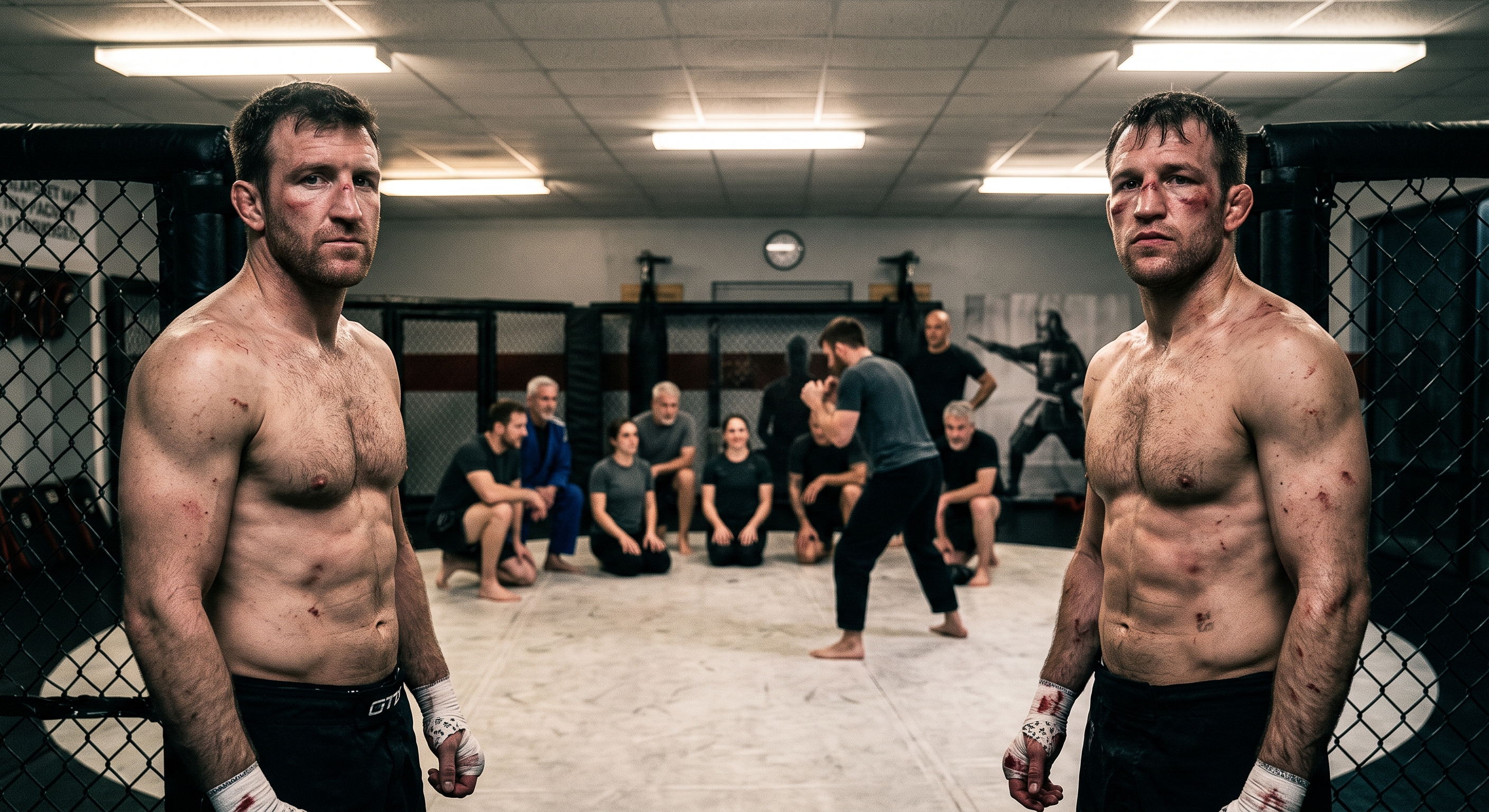
Ask any serious competitor who the most important people in the gym are, and after their coaches and training partners, they'll tell you: the members. The hobbyists. The nine-out-of-ten. And not just because your memberships keep the lights on and the mats down — though let's be blunt, they do, and every fighter who's ever trained in a world-class facility was subsidized by people who train for love rather than glory.
It's more than that. You're the culture. Competitors cycle through their camps — up for a fight, down after, gone for stretches. The hobbyists are the ones who are always there, holding the standard, welcoming the new people, setting the tone in the room the fighters return to. A fight team is the flag on top of the building. The membership is the building.
And one more thing the fighters know: many of them are watching you with something close to envy. The 45-year-old who's been training twelve years, still healthy, still curious, still in love with it — you are what the smart competitors hope to become after. You're not behind them on the path. You're at the part of the path they're trying to get to.
Twenty Years From Now
Let me paint you the picture I've actually watched come true, over and over, across 27 years — because I've now coached long enough to see hobbyists' entire arcs, beginning to middle to the part most people never get to see.
It's twenty years from now. You're somewhere in your fifties or sixties. Most of the people you started adult life with stopped moving seriously somewhere in their forties — their bodies became something they manage rather than something they use. Doctor's visits, stiffness, the slow negotiation with decline that our culture treats as inevitable.
And then there's you.
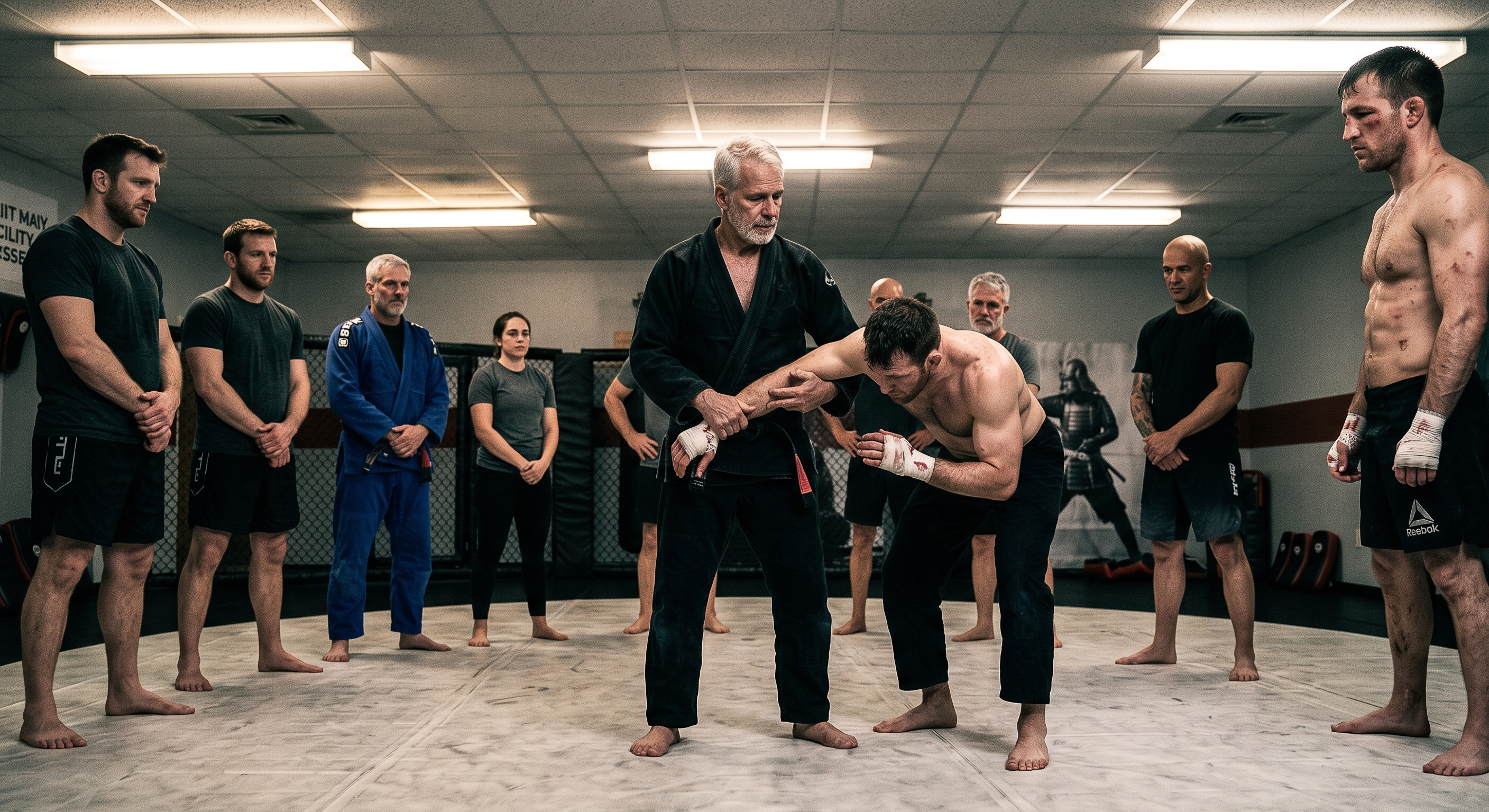
You walk into the gym on a Tuesday like you have for two decades, and the twenty-somethings hold the door with a level of respect that has nothing to do with your age and everything to do with the fact that you can still go. Your movement is economical now in a way it never was at 35 — you've long since stopped spending energy you don't need to spend. Newer members ask you questions, and you realize at some point you became one of the people who holds the room's standard without ever being given a title. Your understanding of the art has gone somewhere the eight-week-camp version of training could never have taken it, because you had the one ingredient no fight camp allows: unlimited time to go deep.
And here's the detail that matters most in that picture: nowhere in it is a fight record. Nobody in that room, twenty years from now, knows or cares whether you ever competed. What they see is the thing a record was only ever supposed to be evidence of anyway — a person the training built.
Run the math backwards from that picture. The version of you standing in that room made roughly one decision, several thousand times:come back this week. That's the entire program. Not talent, not youth, not a competitive career. Attendance, compounded across decades, at an activity you got to keep loving because nothing ever turned it into a job.
The competitors sprint their stretch of the path, brilliantly, and pay the toll for it. You get to walk the whole thing.
Retire the Word
So here's what I want, and it's small and specific.
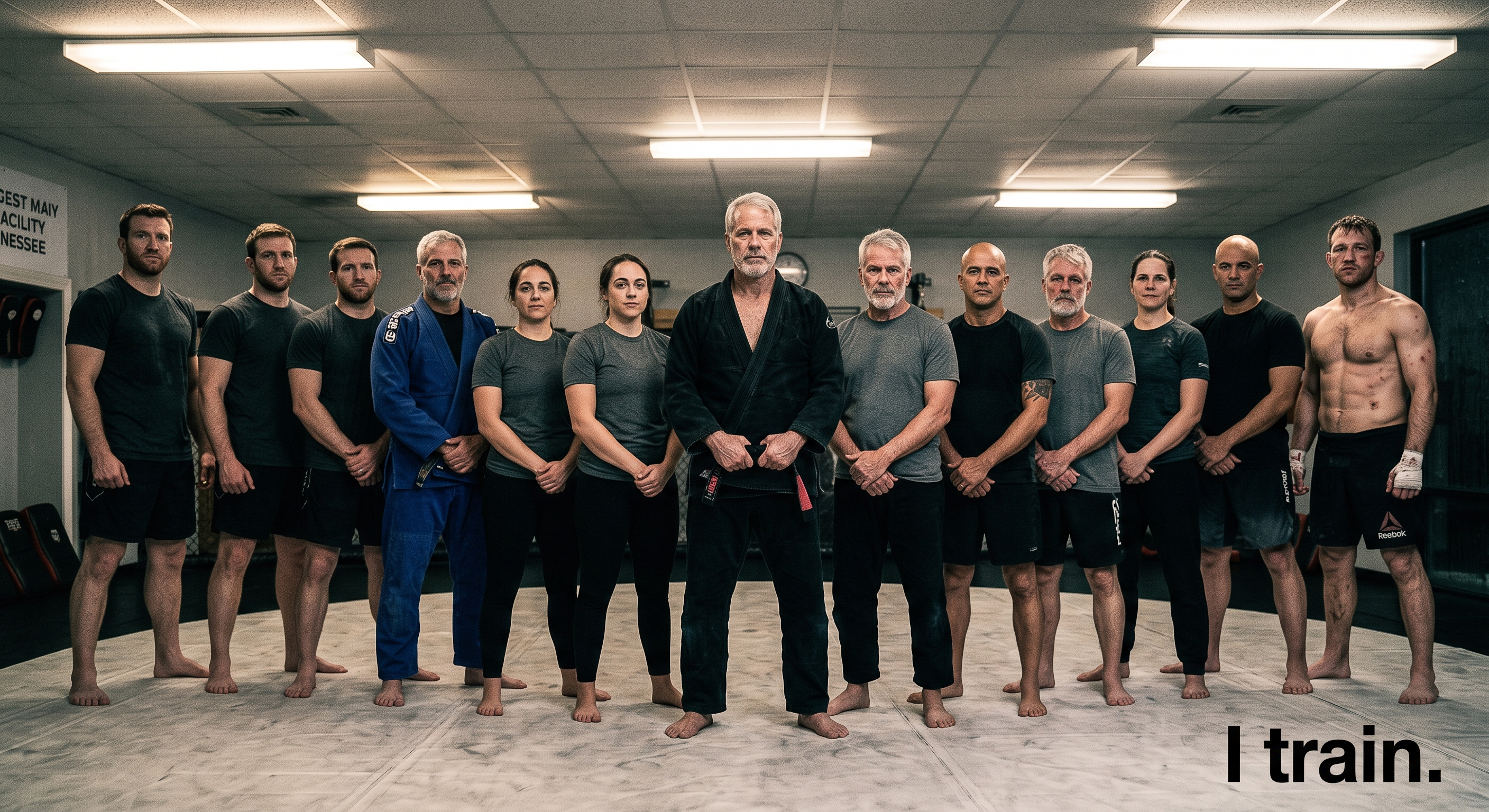
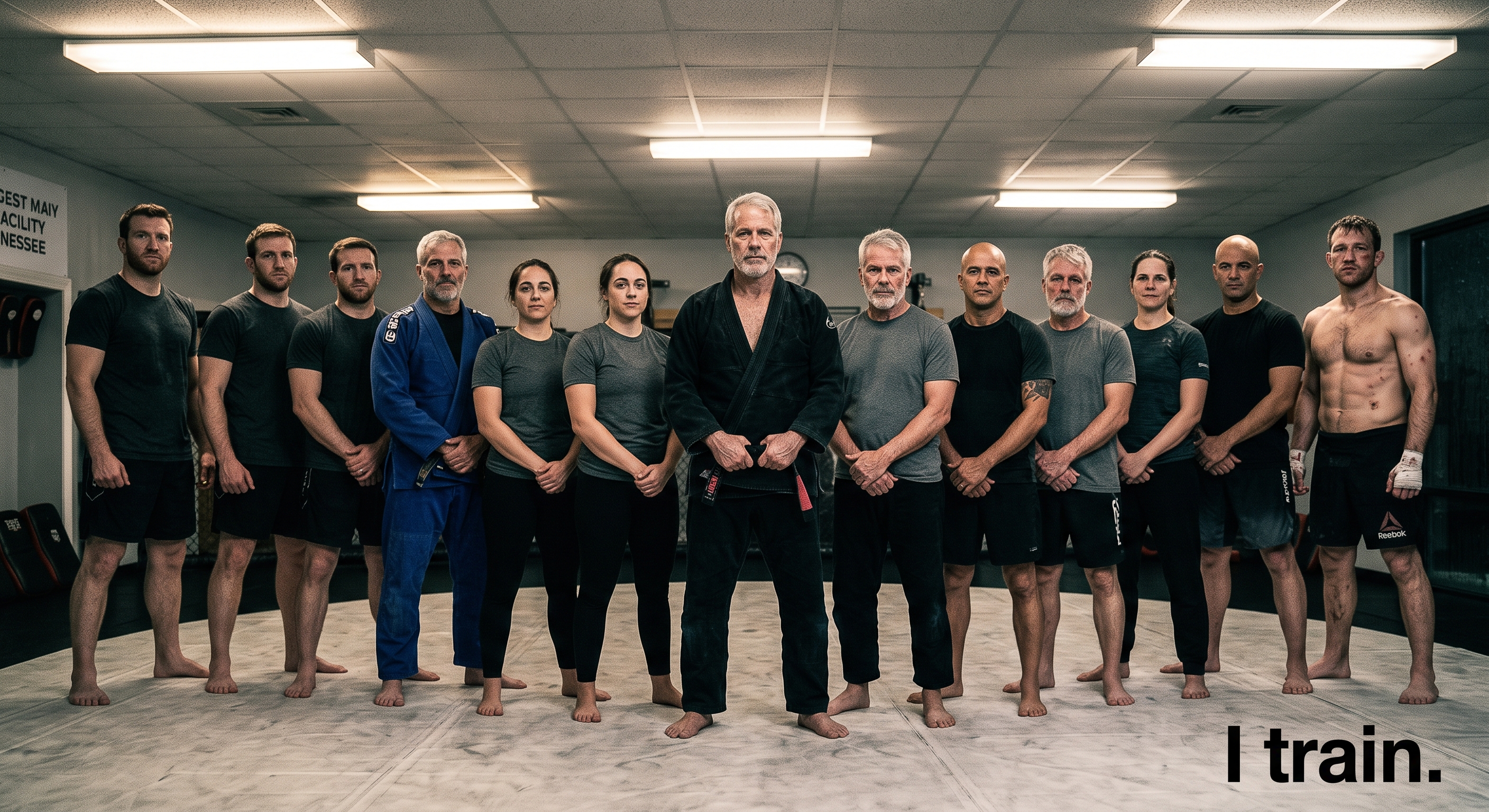
Next time someone finds out you train and asks if you fight, I want you to drop one word from your answer. Not "I just train." "I train." Full stop. Said the way you'd say any other true thing about yourself that requires no apology.
Because here's who that sentence actually describes, whether you've been letting yourself believe it or not: someone who voluntarily walks toward difficulty multiple times a week. Someone who has made friends with fear on a recurring schedule. Someone studying a deep art for the oldest reasons the art exists — protection, discipline, character, community, mastery — with a fifty-year runway and their whole body intact for the journey.
That's not the diet version of anything. That's a martial artist. That's what the word has meant for centuries.
The cage was always optional. The path never was — and you're already on it.
See you on the mat this week.
