
The Most Important Investment You Will Make in Your Child's Future.
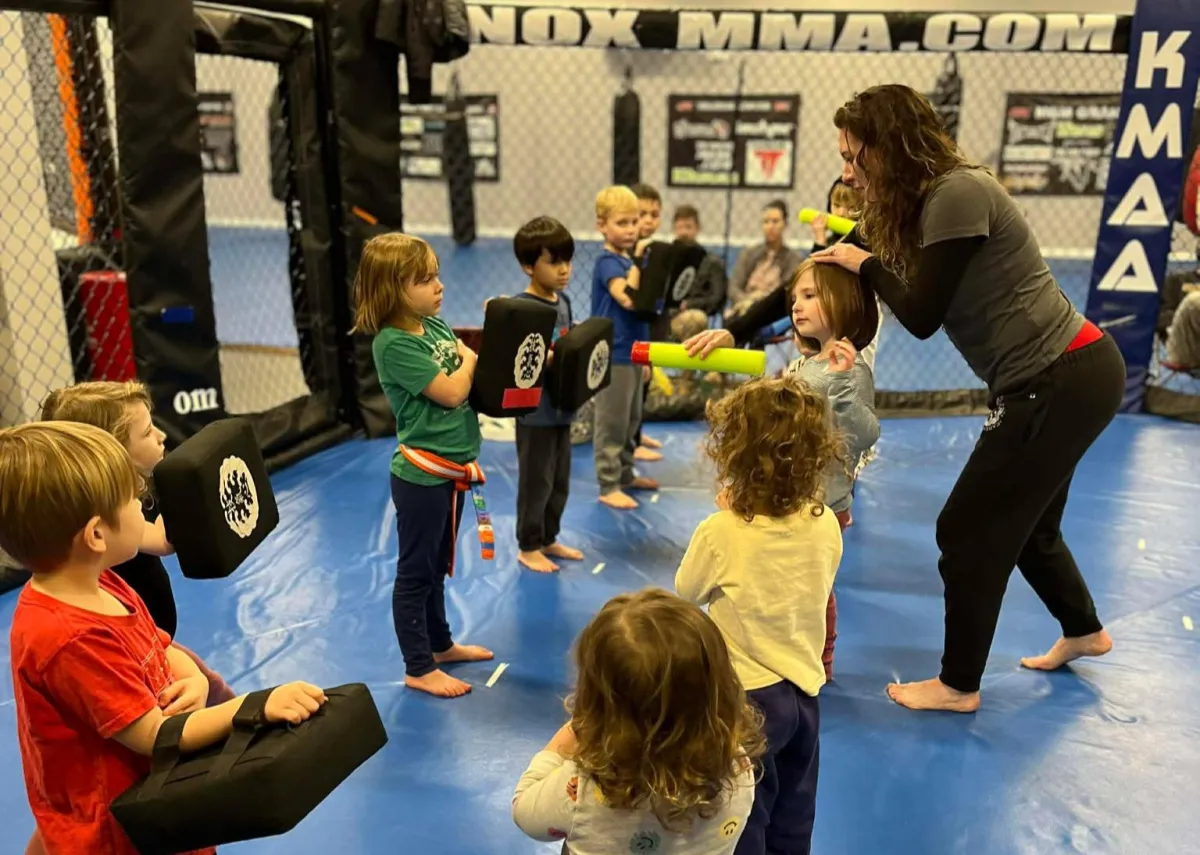
Talent is not born; it is built. In a world dominated by screens and sedentary lifestyles, the 'Little Dragons' program provides your child with a developmental unfair advantage. We don't just teach them to move; we construct the physical and neurological foundation for a lifetime of health, focus, and resilience.

Future-Proofing Health
We are setting the trajectory for your child's physical future. Our program develops the "ABCs" of athleticism: Agility, Balance, and Coordination. Whether they become a fighter, a football player, or a doctor, the physical literacy they acquire here will serve as the base for everything they do next.

Compounding Confidence
Confidence comes from competence. We give your child small, achievable challenges every single day. As they overcome these physical puzzles—escaping a hold, keeping their balance, following the rules—they build a "bank account" of self-belief that protects them against bullying and peer pressure as they grow.

Building the Brain
We utilize the Ecological Dynamics method because it speaks the language of the developing brain. By using "Constraint-Led Games" rather than robotic line drills, we force your child’s brain to solve thousands of micro-problems per class. This builds neural pathways for adaptability and quick thinking that static drills simply cannot create.
TESTIMONIALS
What others are saying
"I cannot put into words how fantastic this place and these coaches have been [for my son]..."
My son has been coming to KMMA for about a year now and I cannot put into words how fantastic this place and these coaches have been for him. They teach character as well as martial arts and they truly care about their students. The other day my son was having an “off” day. He was acting differently, and at times sitting against the wall, not participating in the class. Coach Drey came and sat down next to him and instead of fussing at him and telling him to get to class he just started talking to him. My son spent the next 5 minutes pouring his heart out to Coach Dre about all kinds of stuff and Coach just listened. I am so thankful for this place, the culture, and the coaches!
- Kristin P

"They are awesome with kids..."
Such an amazing place to go. They are awesome with kids. Everyone that works there is so friendly and always made us feel so welcome.
- Missy B
"They are phenomenal people and know what they are doing..."
Both of our boys are training at this gym. They are phenominal people and know what they are doing. Love that Ovince St. Pruex comes to watch their tournaments when he is around. Keep up the great work.
- Melissa H
"This gym is amazing..."
This gym is amazing and the people are so friendly! I love going here and especially that I can bring my kids along! That works great for a full time working outside the house Mom! Thanks to everyone for all the guidance and helping me achieve my goals! I will continue to come to this gym and get into shape!
- Nicole C
Ready to Get Started?
Let's Make a Schedule that fits your busy life!

Frequently Asked Questions
Kickboxing Questions
Is this too intense for a 4-year-old?
Not at all. The intensity is scaled perfectly to their developmental stage. We use "play" as the vehicle for intensity. Your child will be working hard, sweating, and focusing, but to them, it will feel like the most fun game they've ever played. This ensures they fall in love with the process of hard work.
How does this help with school/focus?
Martial arts is often called "moving meditation." The Ecological approach requires constant mental engagement—they cannot zone out. This practice of sustained attention strengthens the prefrontal cortex, directly translating to better focus when they are sitting in a classroom.
What if my child is shy/timid?
This is the best environment for them. We don't throw them into the deep end. We partner them with experienced students and use "parallel play" games to let them acclimate. You will watch their shell dissolve week by week as they realize they are capable of more than they thought.
Why BJJ/MMA instead of Karate/Taekwondo?
We focus on "Gross Motor Skills" and grappling because it is more natural and safer for this age group than striking. Grappling teaches body control and leverage without the impact of punches or kicks, making it the safest and most effective entry point into martial arts.
My child is high energy and plays rough. Will this just make them wilder?
Research on "Rough-and-Tumble Play" shows a strong correlation between controlled physical play and higher Emotional Intelligence (EQ). Studies indicate that children who engage in supervised grappling learn to distinguish between "play" and "aggression" faster than those who don't. By learning to modulate their force to keep the game going, they actually develop superior impulse control and are less likely to be aggressive on the playground.
How does rolling around on mats help with school readiness?
Research suggests that "Open Skill" activities (like martial arts, where the environment changes constantly) improve working memory and inhibitory control better than static activities. In our games, a child must stop, listen, and switch tasks instantly. This "Stop-Go" regulation is the exact cognitive skill required to sit still and listen to a teacher in a classroom.
Is there proof that this builds confidence, or is that just a marketing line?
Psychologists refer to this as "Self-Efficacy"—the belief in one's ability to succeed. Confidence is not given; it is earned through "Mastery Experiences." When a 4-year-old struggles to escape a hold and finally succeeds, their brain releases dopamine linked to effort, not just the result. Studies show that children with high self-efficacy are more resilient, less anxious, and happier long-term because they view new challenges as puzzles to solve rather than threats to avoid.
Why is this better for their brain than just running around outside?
It comes down to Proprioception and Neuroplasticity. While running is great, complex motor skills (like cross-body movements in grappling) fire up the brain's hemispheres simultaneously. Research shows that activities requiring balance and coordination against resistance (like we do) increase the production of BDNF (Brain-Derived Neurotrophic Factor), a protein that acts as "fertilizer" for brain cell growth and learning capability.
Will this help my child develop empathy?
Absolutely. Martial arts is a partnership, not a solo act. To play the game correctly, a child must read their partner's body language and respect their physical boundaries. Studies consistently find that children involved in traditional martial arts demonstrate higher levels of pro-social behavior and empathy because they learn that their actions have direct physical consequences on others. Much of the research is grounded in Social Cognition and non-verbal decoding, which helps children learn empathy not just with words but with action.
Meet Your Child's Mentors
We view ourselves as partners in your parenting journey. Our coaches aren't just teaching your child to grapple; they are reinforcing the values you teach at home. We provide a safe, encouraging, yet challenging environment where your child can fail safely, get back up, and realize that they are stronger than they look. We are honored to help build the next generation.

Emilee King
Little Dragons Coach

Christina Adcock
Youth MMA & BJJ Coach

Katie Ogle
Little Dragons Coach

Olivia Parker
Little Dragons Coach

Bryce Sadler
Youth MMA & BJJ Coach