
Forging Anti-Fragile Kids in a
High-Anxiety World
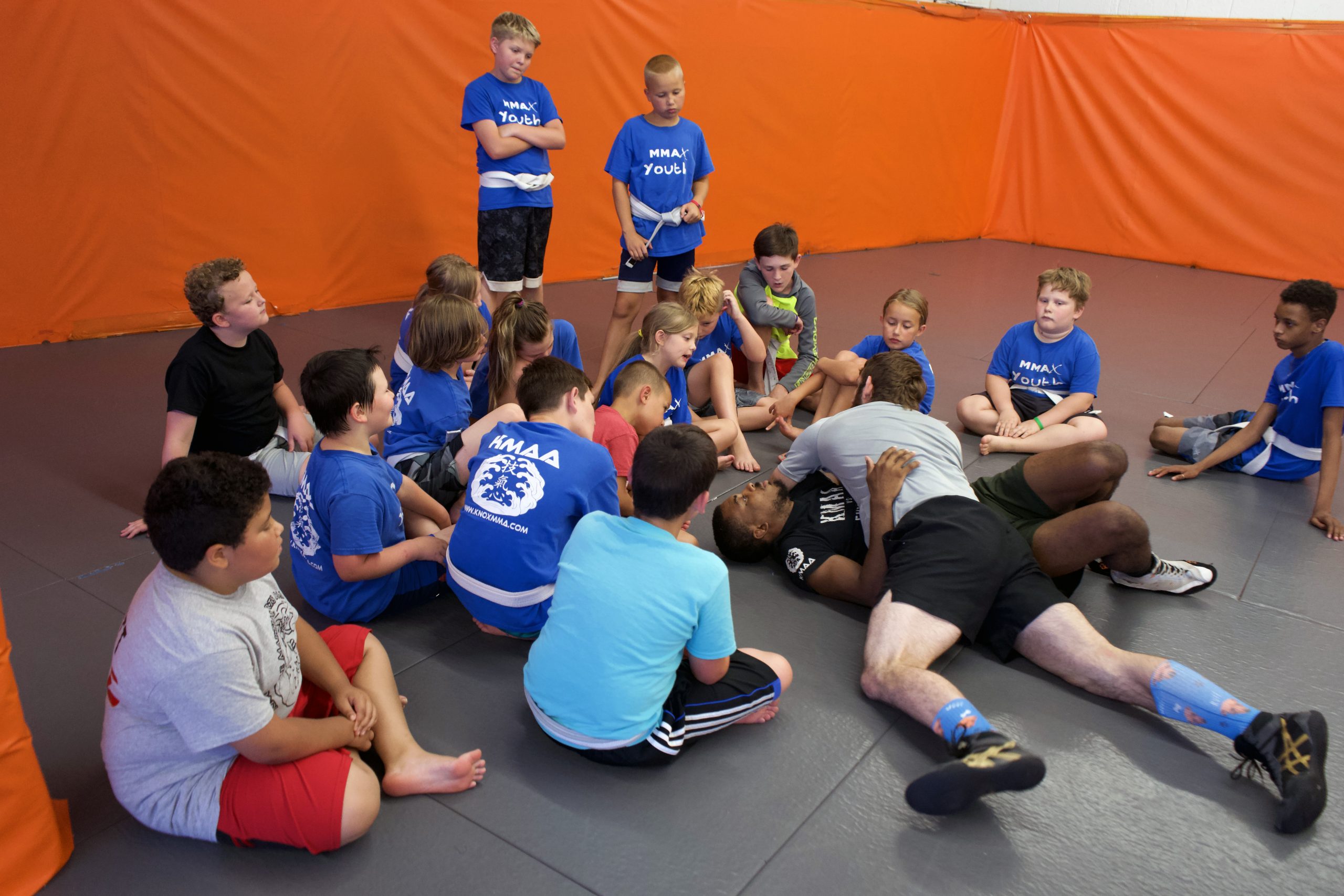
In an era of digital distraction and participation trophies, we offer the antidote: Reality. Our Youth BJJ & MMA program utilizes the Ecological Dynamics method to build not just elite athleticism, but the unshakeable self-belief that comes from knowing you can handle yourself against a resisting opponent. We don't just teach them to fight; we teach them to solve problems under pressure.

The "Bully Vaccine": Competence Creates Peace
Bullies look for victims, not challenges. We don't teach children to start fights; we teach them to finish them safely. By giving your child the competence to control a larger opponent physically (using BJJ leverage) and the confidence to set boundaries verbally, we create a natural "force field" that deters bullies before a punch is ever thrown.

The "Alive" Laboratory: Learning Through Resistance
You cannot learn to swim without getting wet, and you cannot learn to defend yourself by punching the air. We utilize "Alive Training" games where partners offer real resistance. This teaches your child that failure is not a permanent state, but feedback—building the Growth Mindset necessary to succeed in school and life.

Athletic Intelligence:
The Ultimate Base Sport
MMA is the most complex physical activity a human can do. It requires balance, explosive power, endurance, and fine motor skills simultaneously. Whether your child wants to be a fighter or a football player, our program builds the Proprioceptive Intelligence (body awareness) that will make them a better athlete in every other sport they play.

TESTIMONIALS
What others are saying
"KMAA isn't just a gym, it's a second home..."
Kmaa isn’t just a gym, it’s a second home. The people and the culture here are unmatched! Love all these guys and gals!!! no
- Will X

"It's a great way to be more active with your kids..."
It's a great way to protect yourself from danger or harm and to protect your kids and loved ones. And also a great way to stay in shape to be more active with your kids
- Michael E
"This program literally rewired my son's DNA..."
I’m not being over-the-top when I say this program literally rewired my son’s DNA. Before he started, the only 'exercise' he got was scrolling through YouTube shorts. Now? He’s hitting judo trips on his way to the breakfast table! The level of coaching is amazing! They don’t just teach 'moves'; they teach leverage, weight distribution, and they have fun the entire time! He’s walking with a confidence I've never seen before in my 10-year-olds life! If you want your child to BLOSSOM like you've never seen before, send them to kmaa!
- Katherine K
"It's not just about the physical excericse either - it's the mental side as well..."
As a family, we’ve tried soccer, dance, gymnastics, and even other martial arts schools but nothing clicked until we stepped into KMAA The Play As The Way system is mind-blowing. My 8-year-old is talking to me about "Postural Alignment" and "Strong Connection Points" like she's some kind of doctor! It’s not just about the physical exercise either—it's the mental side as well. Her focus in school has increased significantly because she’s learned that if she can solve high-pressure problems like trying to strangle someone who is trying to strangle her, she can definitely solve a long-division problem. It is, without a doubt, the best investment we’ve made in her character. Absolute game-changer!
- Thomas W
Ready to Get Started?
Let's Make a Schedule that fits your busy life!

Frequently Asked Questions
Kickboxing Questions
Is MMA safe for a 7-year-old? I don't want them getting hit in the head.
We have a zero-tolerance policy for head trauma in our youth program. Our "Striking" curriculum focuses on mechanics, footwork, and bag work. When they spar, it is grappling-based (BJJ/Wrestling) or body-sparring only. We prioritize brain health above all else; your child will develop elite skills without taking unnecessary damage.
Will this make my child aggressive at school?
Research, and our own nearly 30-years of experience, consistently shows the opposite. "Aggression" usually stems from insecurity or a lack of impulse control. By giving children a safe outlet for their energy and teaching them the responsibility of their skills, they become the "Protectors" of the playground, not the predators. They know what they can do, so they feel no need to prove it.
My child is uncoordinated/not athletic. Will they be left behind?
This is exactly why they should join. The Constraint-Led Approach (CLA) we use is designed to meet every student where they are. We play games that isolate specific movements (like "Toe Tag" for footwork), allowing uncoordinated kids to build athleticism naturally without the embarrassment of failing at complex drills they aren't ready for yet.
How does this help with ADHD/Focus?
Dr. John Ratey (Harvard Medical School) calls complex exercise "Miracle-Gro for the brain." Our classes require Executive Function—the ability to plan, switch tasks, and control impulses in real-time. This intense physical problem-solving increases dopamine and norepinephrine levels, helping to regulate the ADHD brain naturally and improve focus in the classroom.
Do they have to compete?
No. While we have a highly successful competition team, it is 100% optional. We believe that the training room itself provides enough challenge for most students. If your child wants to compete, we will prepare them; if not, they will still become a black belt in life.
Will martial arts help my child's grades?
Absolutely. Think of the mats as a laboratory for the classroom. Research shows that the complex motor skills required in MMA/BJJ stimulate the production of BDNF (a protein that aids learning and memory). By investing in their physical coordination, you are directly investing in their cognitive hardware, often leading to better focus and higher test scores in school.
Why is martial arts tuition higher than soccer/baseball?
Seasonal sports are an expense; martial arts is an education. Most seasonal leagues rely on volunteer parents who, while well-meaning, are often learning on the fly. At KMAA, you are hiring career professionals who are experts in mentorship, safety, and child development.
The Mentorship Gap: Every coach leaves a lasting mark on a child’s psyche—the question is, what kind of mark? We have all seen volunteer coaches lose their temper and scream at a referee over a bad call. Is that the emotional blueprint you want for your child?
At KMAA, we model how to handle adversity, unfairness, and difficulty with grace, poise, and strength, not tantrums. You do not look for the "cheapest" doctor or the "cheapest" lawyer when your family's future is on the line. Why would you settle for the cheapest mentor? You are investing in a professional leadership team dedicated to ensuring your child grows into a strong, successful adult—not just a kid who played a game for three months.
For more than 27 years we've been Knoxville's best choice for parents to choose when investing in their child(ren). The reason we've been around so long is that thousands and thousands of parents have been blown away by the long term success we develop in each and every child on the mat.
How long does it take to get a Black Belt?
In a world of instant gratification and 15-second videos, this is the ultimate lesson in Delayed Gratification. We do not sell belts here. We teach your child that meaningful achievements take years of consistent effort—a mindset shift that will serve them far better in their future career than a participation trophy ever could.
The ability to delay gratification is the single biggest predictor of future success. It's more important than wealth, more important than race, more important than gender, more important than sexual orientation, more important than economic class... it's the single biggest predictor of future success. A lot of those other things you, as a parent, don't have control over. However, helping them develop the ability to delay gratification is the one thing that if you invest in it early, will pay massive dividends for decades and decades and decades of your child's life. It also happens to be something that we at KMAA are amazing at instilling.
My child is shy/struggles socially. Will this help?
Yes. The "Social Capital" your child builds here is invaluable. Unlike school, where social hierarchies can be cruel, the mats are a meritocracy based on effort and mutual respect. Your child will interact with peers in a high-trust environment, building the social confidence to look adults in the eye and speak clearly—a "soft skill" that pays dividends for a lifetime.
Karate vs. BJJ/MMA for kids?
This is a choice between "Performing" and "Problem Solving." Traditional arts often focus on memorizing patterns (Kata). Our Ecological MMA approach focuses on solving live problems against resistance. By choosing KMAA, you are investing in your child's ability to adapt and think critically under pressure, rather than just repeating what they are told.
Why do you call this 'Youth Development' instead of just 'fighting'?
Because fighting is temporary, but character is permanent. We use the medium of combat to teach lessons that cannot be learned in a classroom: how to handle failure, how to control emotions, and how to respect others. You are investing in a curriculum that builds a resilient, "Anti-Fragile" human being.
How does this prepare them for the teenage years?
The best way to keep a teenager out of trouble is to give them a positive tribe and a sense of purpose. By investing in their martial arts journey now (ages 6-12), you are anchoring them to a group of disciplined peers and mentors before the peer pressure of high school begins. It is "pre-hab" for the teenage years.
What is the biggest return on investment I will see as a parent?
Amongst all the other things we've listed, one of the biggest returns that we've heard parents praise us for is: Peace of mind. Knowing that your child can physically defend themselves gives them a quiet confidence that repels bullies without violence. You are investing in the certainty that your son or daughter can walk through the world with their head up, secure in their own skin.
Meet the Mentors
We know the stereotype: the shouting drill sergeant or the 'Cobra Kai' sensei. That isn't us. We are fathers, mothers, and educators who happen to be expert martial artists. We understand that you are entrusting us with your child's confidence and safety. We don't take that lightly. Our goal is not just to build better fighters, but to build the kind of young men and women we want our own children to be friends with.

Christina Adcock
Youth MMA/BJJ Coach

Bryce Sadler
Youth MMA/BJJ Coach

Lex Scott
Youth MMA/BJJ Coach

Dan Boehle
Little Dragons Coach

Dre Miley
Youth MMA/BJJ Coach